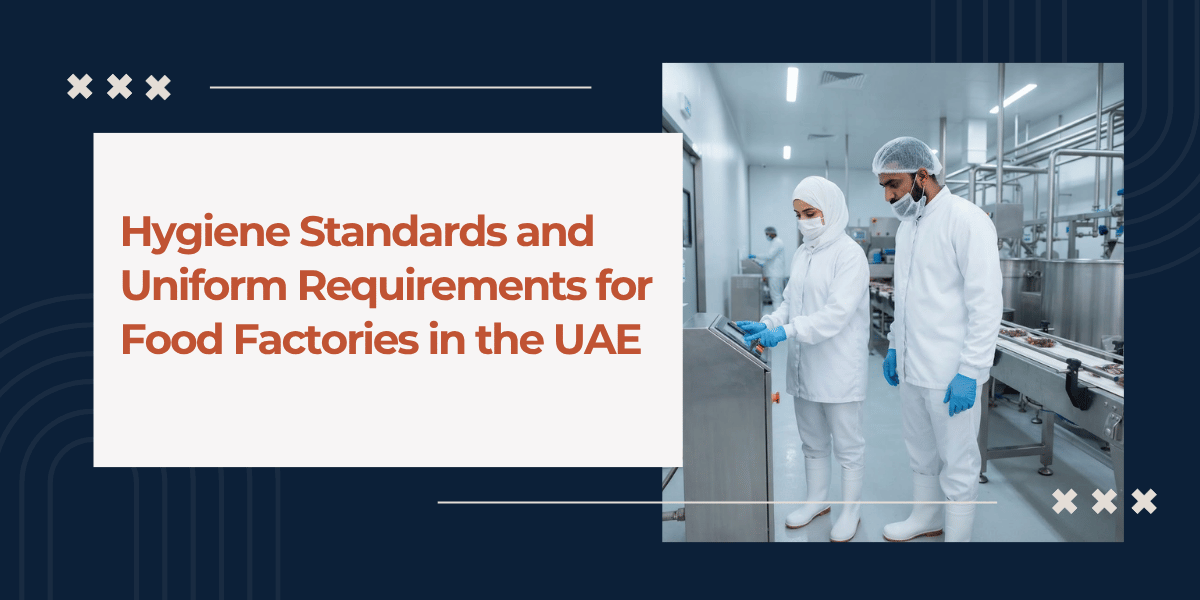
Uniform requirements in the food industry are similar to those in hospitals, especially regarding hygiene. However, the regulations differ, and functionality is linked to employee hygiene and contamination control.
Because the UAE prioritizes public safety, food factories must follow food safety codes and ethical standards, ensuring workers wear clean, appropriate protective clothing and follow strict hygiene procedures when handling food or packaging materials. So, what do you need to know about these standards? Let’s talk.
Food Factory Hygiene Standards in UAE
The Dubai Food Code advises workers to wear clean outer clothing or protective overalls, preferably light-coloured. Workers should have sufficient uniforms to change into when they get soiled.
UAE food factory hygiene standards focus on preventing biological, physical, and chemical contamination. Every food business must have documented hygiene procedures for the following: Employees and visitors; uniforms and personal protective equipment; cleaning; handwashing; laundry
The main expectations from UAE food safety regulations for factories are:
Employees shall maintain a high degree of personal hygiene.
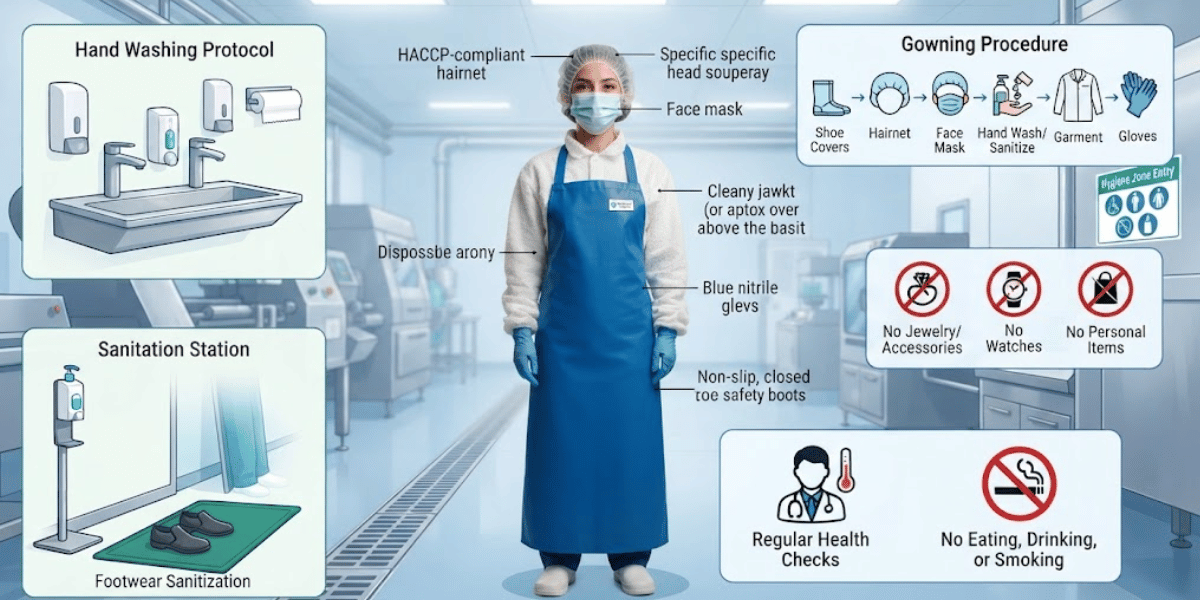
Workers must wear clean protective clothing when entering production areas.
Hair must be completely covered by a clean hairnet, cap or other suitable head covering.
Beards and mustaches should be covered where there is a risk of contamination.
Food handlers should not wear jewellery, watches, or unsecured items in food handling areas.
Uniforms should be clean, in good condition, fit for purpose and suitable for the task.
Change protective clothing when it becomes dirty, sticky, wet or otherwise contaminated.
Food-handling shoes should be closed, non-absorbent and easy to clean.
Uniforms worn for food protection shall not be worn outside the workplace for non-work-related activities.
Abu Dhabi guidance emphasizes the need for clean protective clothing, hairnets, gloves, masks and beard covers as required by the work activity or hazard assessment. Exact food factory uniform requirements in the UAE may vary by emirate, product type, production process, and risk assessment. Therefore, factories should check requirements with the relevant local food control authorities.
Uniform Requirements for Food Factories
Establish a documented hazard analysis of Uniform Requirements for food factories. Protection levels may vary for a bakery, dairy plant, meat-processing facility, beverage factory and ready-to-eat food plant.
Clothing must adequately cover the body and minimize the risk of hair, sweat, skin particles, loose fiber, or personal items entering the product.
RAK food establishment guidance advises against buttons, hooks, and outside pockets above the waist, as they may become physical contamination hazards. Zips or press studs are usually better alternatives.
The key is to find a material that offers a good mix of breathability, comfort, shrink resistance, lint control, and the ability to handle the required washing temperatures. And of course, the fabric must be safe for the wearer’s health and hygiene.
Disposable vs Washable Food Industry Uniforms
Deciding between disposable and washable uniforms in the food industry hinges on production risk, task duration, and expected contamination. Generally, washable uniforms are best for regular production work because they’re sturdy, save money over time, and are more sustainable when cleaned through a proper laundry system. Disposable options, however, shine in situations like:
Visitors and contractors.
Short-term staff.
Maintenance roles in production areas.
High-risk cleaning tasks.
Allergen changeovers.
Emergency replacements when reusable uniforms aren’t available.
Make sure to dispose of disposable aprons, sleeve covers, beard covers, hairnets, and overshoes right after you use them or if they become contaminated. They shouldn’t be seen as a stand-in for proper sanitation. Reusable clothing is acceptable only when it can be thoroughly washed, disinfected, inspected, and stored hygienically.
HACCP-Compliant Uniforms and Buying Guidance
HACCP-compliant uniformsshould align with the factory’s hazard analysis and critical control points, not just be a fashion statement. Uniform design should minimize the risk of physical contamination, support hygienic zoning, and make it easy to monitor employee compliance.
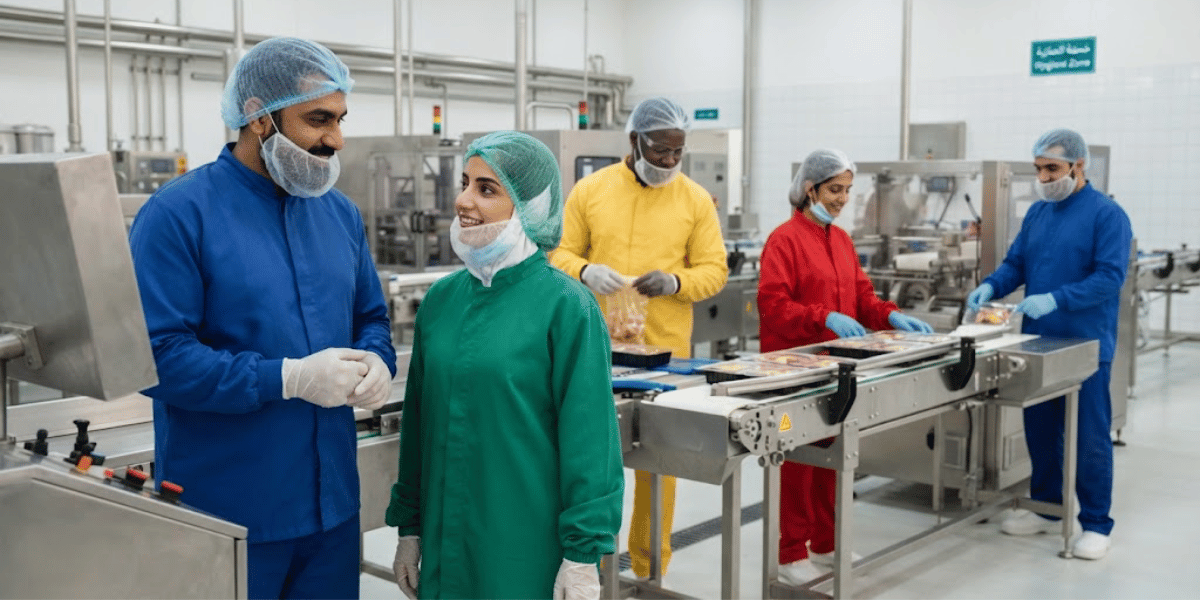
Color-coding uniforms in food processing - options for production zones.
Embroidery or identification placed away from exposed food areas.
Size grading for the entire workforce.
Replacement stock and fast replenishment.
Industrial laundry or care recommendations.
Uniform suppliers in the UAE should definitely provide insights on how their garments hold up after multiple washes. Ask about shrinkage, colorfastness, seam strength, fabric weight, drying time, and how well the fabric resists detergents.
Conclusion
Food factory uniforms are more than workwear; they are essential for maintaining hygiene, controlling contamination, and protecting food products.
Silver Thread UAE can help businesses develop practical, durable uniform solutions suited to different food-processing environments. From fabric and fit to protective accessories and replacement requirements, choosing the right uniform partner can make hygiene standards easier to maintain across your workforce.
FAQs
. How often should food factory uniforms be washed?
Clean food factory uniforms after each use, or whenever they become soiled or contaminated. Follow your documented hygiene procedure and laundry requirements.
Can food factory employees wear uniforms outside the workplace?
Food-protective uniforms should generally remain within the workplace to reduce contamination risks. Employees should change before leaving production areas for personal activities.
Why are hairnets and beard covers important in food factories?
Hairnets and beard covers help prevent hair and facial hair from entering food or packaging areas. Their use should match the factory’s hygiene procedures and risk assessment.