


Choosing the right uniform colour is often the most underestimated part of the process. We often take it from other similar industries and just adopt it. But now industries are changing, and they understand that colour choice, especially in food processing, isn’t just about aesthetic or visual appeal but also about food safety, cross-contamination control, allergen management, and daily clarity.
Between the 2 choice we have white and colour-coded, but which is the best? White uniforms offer a super level of contamination detection, but colour-coded systems ensure better controls for allergen management and regularity compliance.
For food processing companies working with uniform suppliers in the UAE, understanding uniform trends for food processing helps make the right choice for safety and efficiency.
Now, what to choose? Let’s dive deep into the food-industry uniform comparison.
Why White Became the Standard?
For more than a century, white uniforms have been the standard for food factory workers. The major factors that brought them to this decision were:
- Contamination visibility
- Perception of cleanliness
Advantages of White Uniforms in Food Processing
-
Contamination Detection
Grease, blood, product residue, and splashes of cleaning chemicals are just a few of the contaminants that white is still the best colour for identifying. Without special gear, supervisors get great help with identifying worker hygiene and conducting visual audits.
-
Bleach Compatibility
For complete pathogen and allergen decontamination between shifts, white cloths are easy to wash at high temperatures with chlorine bleach or industrial sanitising agents, without worrying about colour fading.
-
Regulatory Baseline Acceptance
White uniforms are also accepted as a compliant baseline by many food safety standards worldwide. This system is also well known to auditors at certification organisations, such as HACCP-compliant uniforms.
-
Lower Initial Cost
For smaller businesses, sourcing, stocking, and replacing white uniforms is usually less expensive than sourcing, stocking, and replacing colour-coded SKUs.

Limitations of White-Only Systems
- Lack of Intrinsic Zone Differentiation: white relies solely on procedural control, as it doesn’t provide any visual cues to identify the worker’s department.
- Gaps in Allergen Management: White uniforms also make it challenging for employees on different allergen-specific lines to be visually distinct across facilities.
- Audit Complexity: Rather than instantaneous visual verification, verbal confirmation or badge systems are needed to determine whether an employee is in the proper zone during audits or inspections.
How does Colour Coding Uniforms in Food Processing Work?
Using colour-coded uniforms in food processing helps identify different work areas. For example, allergen zones, risk categories, or specific job roles can be determined differently. The colours behave as a clear, non-verbal signal for compliance.
So, anyone on the floor will understand the line workers, from supervisors to quality managers and even external auditors.
Advantages of Colour-Coded Clothing for Food Safety
-
Preventing Cross-Contamination
Having workers wear specific colours when entering a certain zone reduces the risk of accidentally straying into another zone. For example, if a worker in a blue uniform is heading toward a white zone that requires high care, it immediately stands out.
-
Managing Allergens
Different colors can also help identify multiple allergens at the same time. How? Assigning different colours to lines that handle peanuts, gluten, dairy, or other major allergens creates a clear, ongoing visual barrier to prevent cross-contact.
-
Clarity for Visitors and Audits
External auditors can quickly check if the zones are compliant just by looking, without needing any documents or a supervisor to guide them. This makes the audit process smoother.
Challenges of Colour-Coded Systems
Here are some things to think about:
- Higher upfront costs: If you’re stocking up on a bunch of different colours, it can make things more complicated. This means you’ll have higher costs.
- Training needs: Everyone, from workers to supervisors to contractors, needs to be well-trained on the colour scheme.
- Safety visibility issues: Darker colours like red, navy, or black can hide some dirt or contamination that you’d notice right away on white.
- Colour perception: Keep in mind that not everyone sees colours the same way; some workers may have colour vision issues.
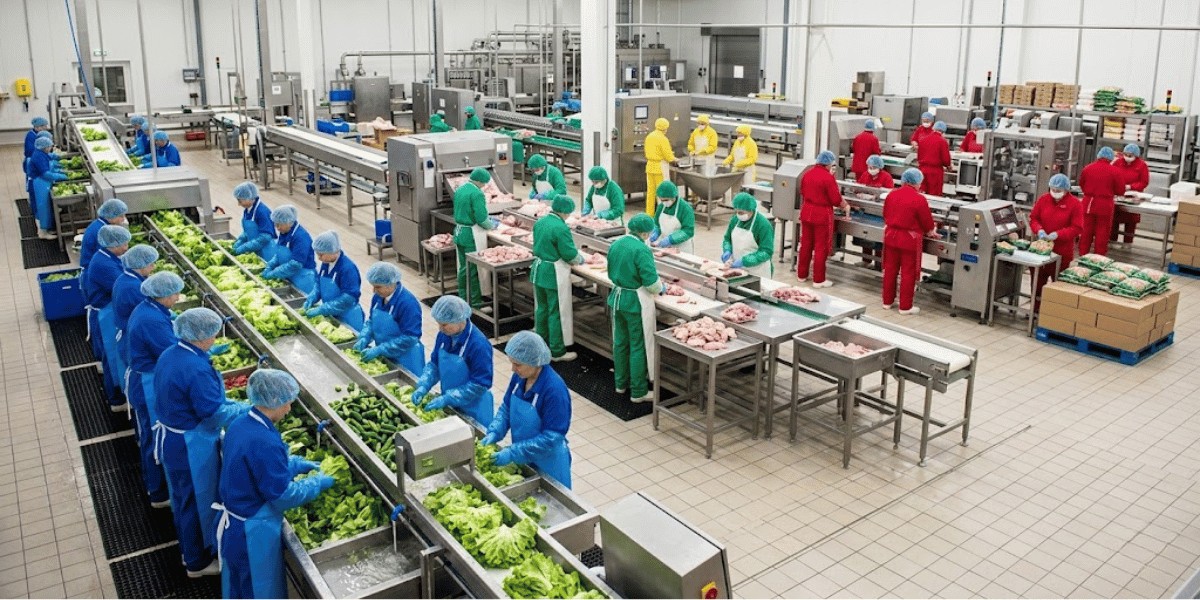
White Vs Colour-Coded Uniforms: Head-to-Head Comparison
Now, before you add all the essential features of food manufacturing uniforms, know the colour too. Here is head to head comparison to make an informed decision.
| Criteria | White Uniforms | Colour-Coded Uniforms |
| Contamination Visibility | Excellent – stains immediately visible | Variable – depends on colour chosen |
| Zone Control / Traceability | Poor – no visual differentiation | Excellent – instant zone identification |
| Cross-Contamination Prevention | Limited – relies on SOPs only | Strong – visual cue reinforces compliance |
| Allergen Management | Difficult to enforce visually | Very effective – dedicated colours per allergen |
| Regulatory Compliance | Widely accepted baseline | Preferred under FSMA, BRC, SQF, HACCP |
| Laundry & Maintenance | Requires bleaching; shows wear faster | Easier per-zone sorting; longer visible life |
| Staff Morale & Identity | Neutral/clinical feel | Improved – sense of role and team identity |
| Initial Cost | Lower upfront investment | Higher initial setup; lower long-term risk cost |
| Visitor / Audit Clarity | Requires explanation of zones | Self-evident to auditors and visitors |
Now, also remember that when it comes to food industry uniforms, we have to consider the choice between disposable and washable options. Disposable uniforms completely eliminate the need for laundry and reduce the risk of cross-contamination during washing.
On the other hand, washable uniforms are generally a more sustainable and cost-efficient choice for everyday use. Now, ultimately, the choice is for you to make and choose safety uniforms for food production.
Conclusion
Choosing the right uniform colour is critical to safety and efficiency in food production. Whether you opt for white or colour-coded uniforms, both systems offer distinct advantages for contamination control, allergen management, and regulatory compliance.
Understanding white vs colour-coded uniforms helps businesses make informed decisions regarding operational safety.
For businesses looking to buy customized uniforms in the UAE, Silver Thread UAE stands out as a trusted uniform manufacturer in the UAE, providing solutions tailored to your operational needs.
Partnering with a specialized food manufacturing uniform manufacturer ensures your staff stay safe, compliant, and professional. It creates a visible, organised, and effective workflow across all production areas.
FAQs
-
What are the advantages of white uniforms in food processing?
White uniforms offer superior visibility of contamination, allowing supervisors to detect dirt or spills instantly. They are bleach-compatible, cost-effective, and widely accepted under global food safety standards.
-
How do colour-coded workwear systems improve safety in the food industry?
Colour-coded uniforms clearly differentiate zones, allergens, and job roles. This visual system prevents cross-contamination, simplifies audits, and reinforces compliance among workers on the production floor.
-
Which type of uniform is better for maintaining hygiene in food processing facilities?
Washable uniforms provide sustainability and cost-efficiency for daily use. Disposable uniforms eliminate laundry risks and reduce cross-contamination, making them ideal for strict hygiene control.