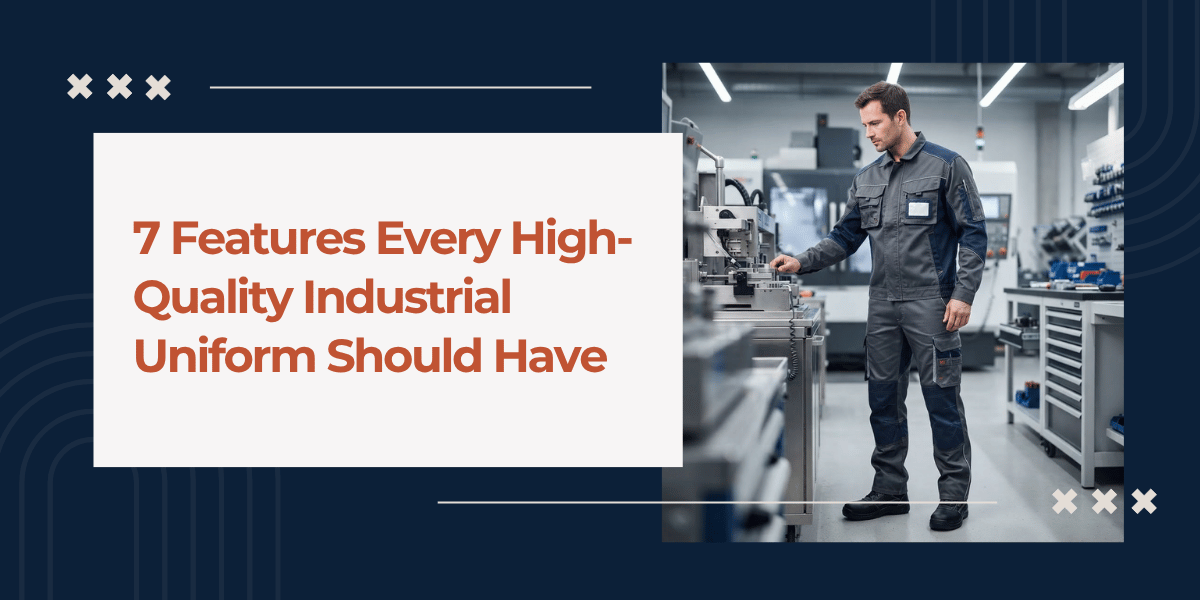
Branded clothing is nowhere close to a high-quality industrial uniform. Industrial uniforms serve a different purpose: they must be comfortable, durable, and as functional as possible while providing the safety workers need.
Today, we’re taking the discussion a step further by looking at the top features every high-quality industrial uniform should have.
So, what makes a good industrial uniform?
When you’re buying industrial uniforms & safety wear, look for these 7 must-have features. This will help ensure uniforms serve their purpose.
What to Look for in Industrial Uniforms: 7 Features
If you are unsure what must be in the features of a good industrial uniform, here are 7 of them to focus on:
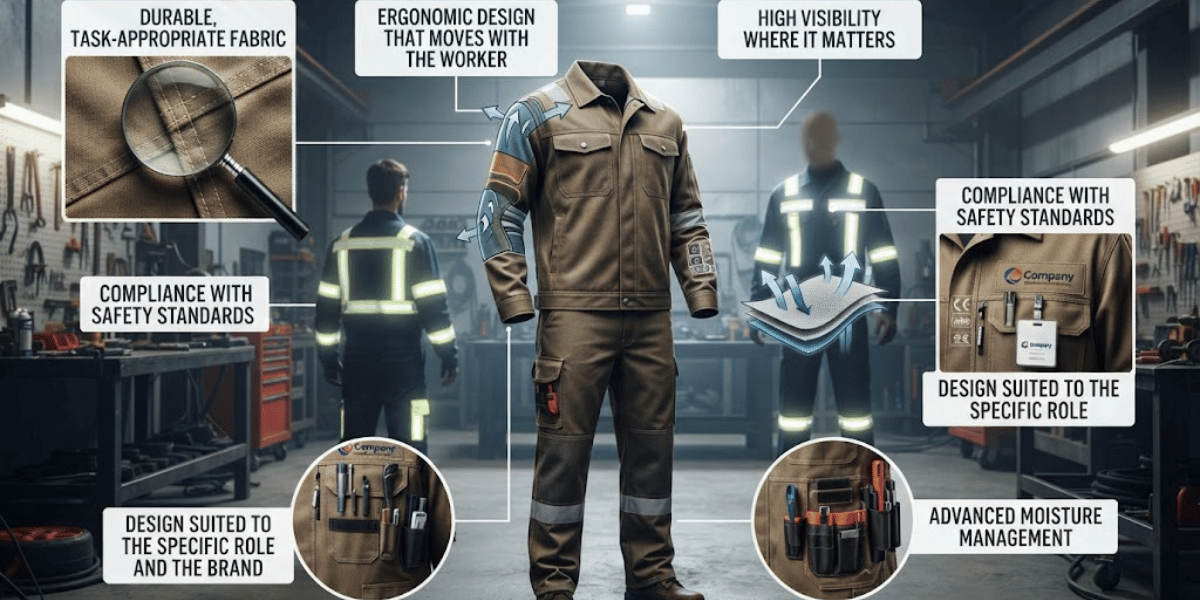
1. Durable, Task-appropriate Fabric
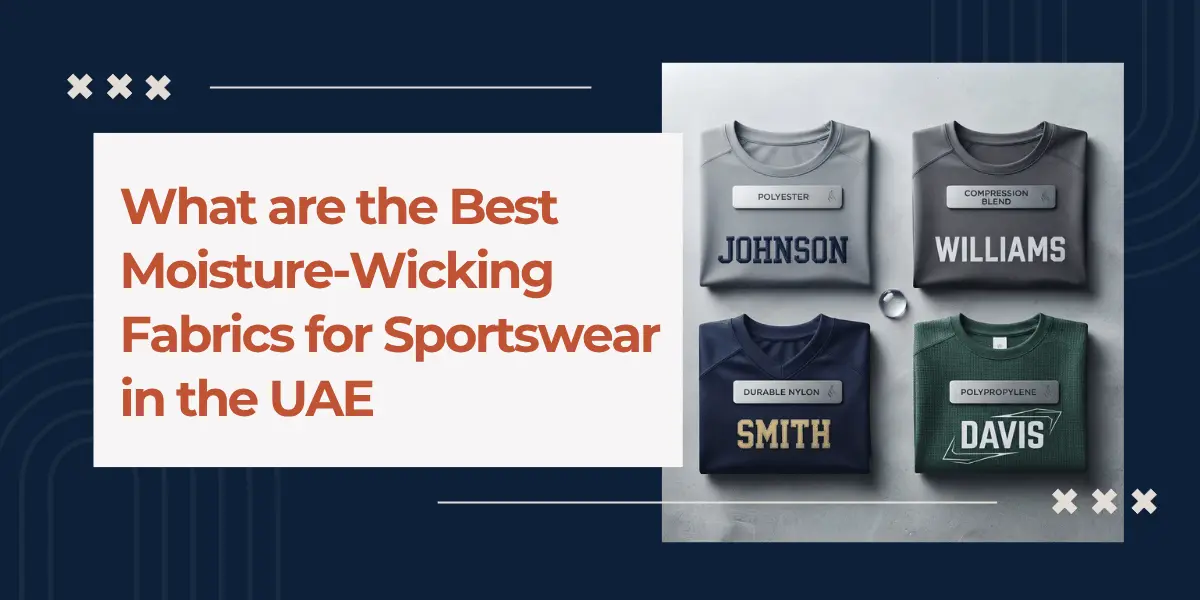
The fabric has to be right for the job. Welders need flame-resistant material, while warehouse workers need durable fabrics that can withstand frequent movement, abrasion, and daily wear. The material should also hold up through multiple washings without falling apart. This is where industrial coverall uniformsget their reputation.
They are made from heavier weaves to resist tears, chemical exposure, and abrasion.
Search for:
Ripstop or canvas-weight for general labour; cotton blends
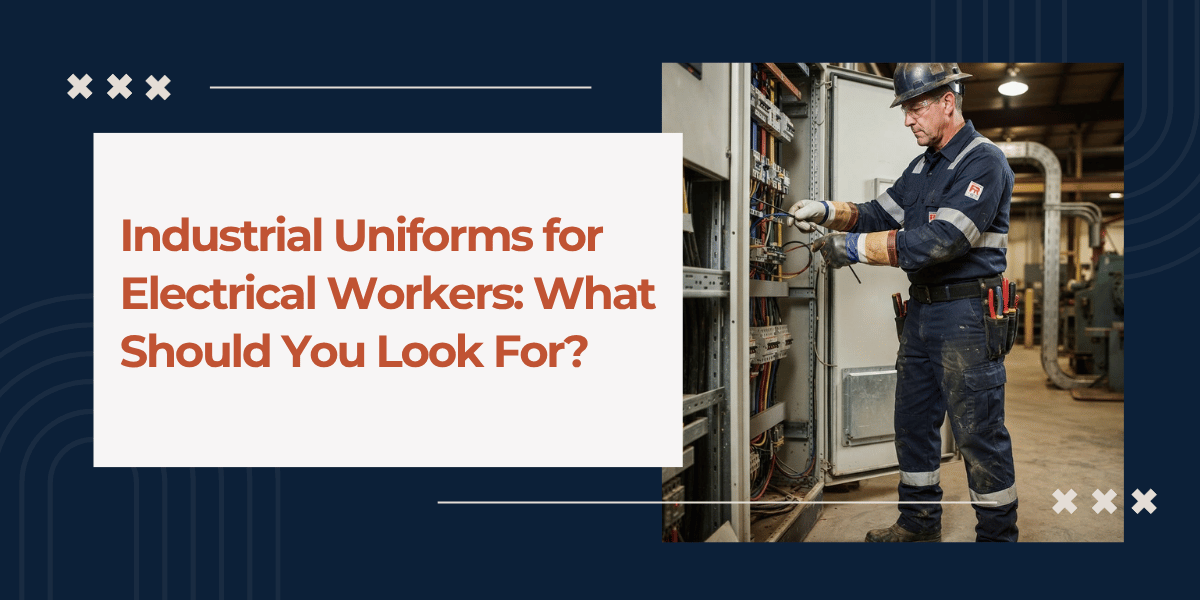
Welding, electrical, or oil & gas jobs: flame-resistant (FR) fabric
Acid or solvent handling: chemical-resistant coatings
Reinforced stitching at stress points such as knees and elbows
Cheap out here and you’ll be on your way to making industrial uniforms & safety wear a recurring cost instead of a one-time investment in no time.
2. Ergonomic Design That Moves With the Worker
Comfort is the base of compliance. If a uniform restricts movement or overheats, workers won’t wear it properly, and safety suffers. That is why you need to understand the benefits of ergonomics in industrial workwear. It allows easy motion, reduces fatigue, and reduces strain-related problems during long hours.
To be sure, look for articulated patterning, gusseted underarms and crotches, and mechanical‑stretch fabrics at the shoulders and knees.
Also, breathable vents or mesh lining are better for hot places. Besides, never forget the correct fit guidance. It will prevent snagging and discomfort.
This ergonomic approach is especially important for construction workers’ uniforms. They have physically demanding roles, so mobility is essential.
3. High Visibility Where it Matters
On a construction site or in a warehouse buzzing with forklifts, being seen is a must. That’s where high-visibility workwear comes into play, featuring bright fluorescent fabrics, usually in eye-catching orange, yellow, or green, along with reflective tape in industrial uniforms. This combination keeps workers visible in broad daylight, dim lighting, or when headlights glare at night.
Fluorescent panels should adhere to ANSI/ISEA or EN ISO 20471 standards, depending on your location.
To ensure complete visibility, place reflective strips across the shoulders, chest, and legs for all-around safety.
And don’t forget, the tape should be sewn on, not glued, so it can handle multiple washes without falling apart.
4. Compliance with Safety Standards
Choosing a uniform that looks great but skips certification can put your business at legal risk. Industrial uniforms and compliance go hand in hand.Regulators want to see documented ratings for PPE-grade uniforms for flame resistance, chemical protection, or visibility, depending on your industry.
Since industrial workwear safetystandards vary by country and sector, your uniform supplier should be able to back up their claims with certification paperwork. Don’t hesitate to ask for test reports before you place a bulk order, especially for flame-resistant and chemical-resistant options.
5. Ease of Maintenance
If your uniform starts to fall apart after just ten washes, it’s not really doing anyone any favors in the money department. Here are some practical tips for maintaining your industrial uniforms:
Wash your flame-resistant (FR) and reflective gear inside out to protect those coatings.
Avoid using bleach and fabric softeners, as they can compromise the flame-resistant treatments.
Whenever possible, let the reflective tape sections air-dry to prolong their life.
Don’t forget to rotate your uniforms so that no single set gets worn out too quickly.
A uniform that’s easy to care for will stay functional and looking good much longer than one that needs constant attention.
6. Customization for the Workforce and the Brand
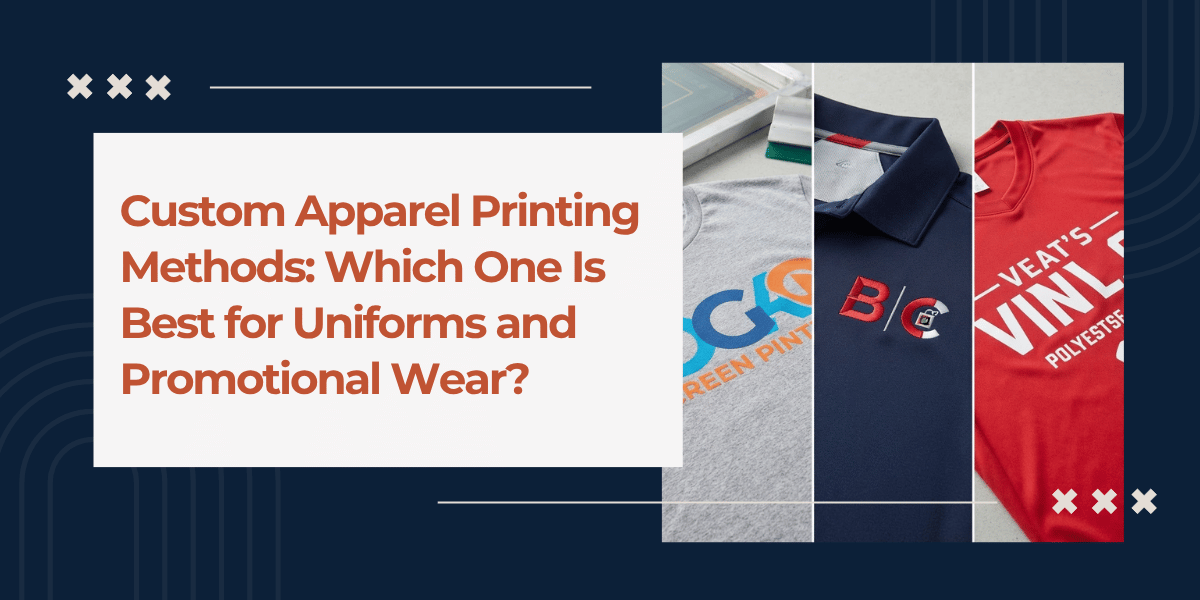
Different industries have their own distinct ways of dressing. Custom industrial uniforms give companies the flexibility to adapt their uniforms to the specific risks of the job, the climate, and their branding needs, whether it’s about logo placement, color coding for departments, or including name badges.
If you’re sourcing locally, UAE uniform manufacturers offer made-to-order services, which is vital in a region where heat resistance and breathability are key. Before committing to a supplier for customized uniforms in the UAE, businesses should evaluate turnaround times, minimum order quantities, and fabric selections.
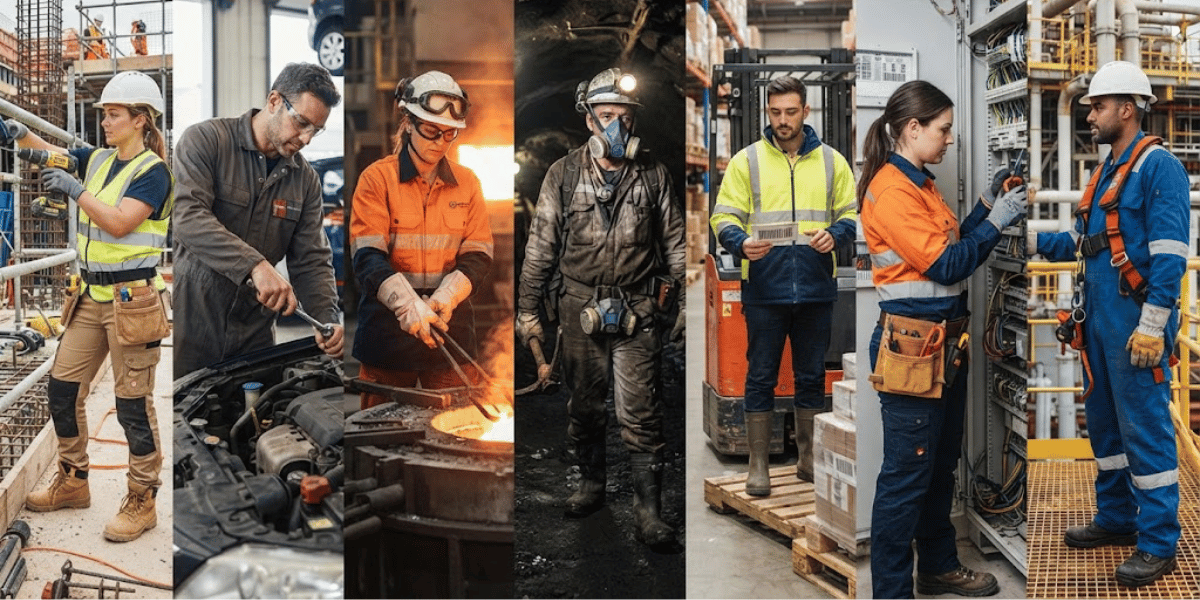
7. Design Suited to the Specific Role
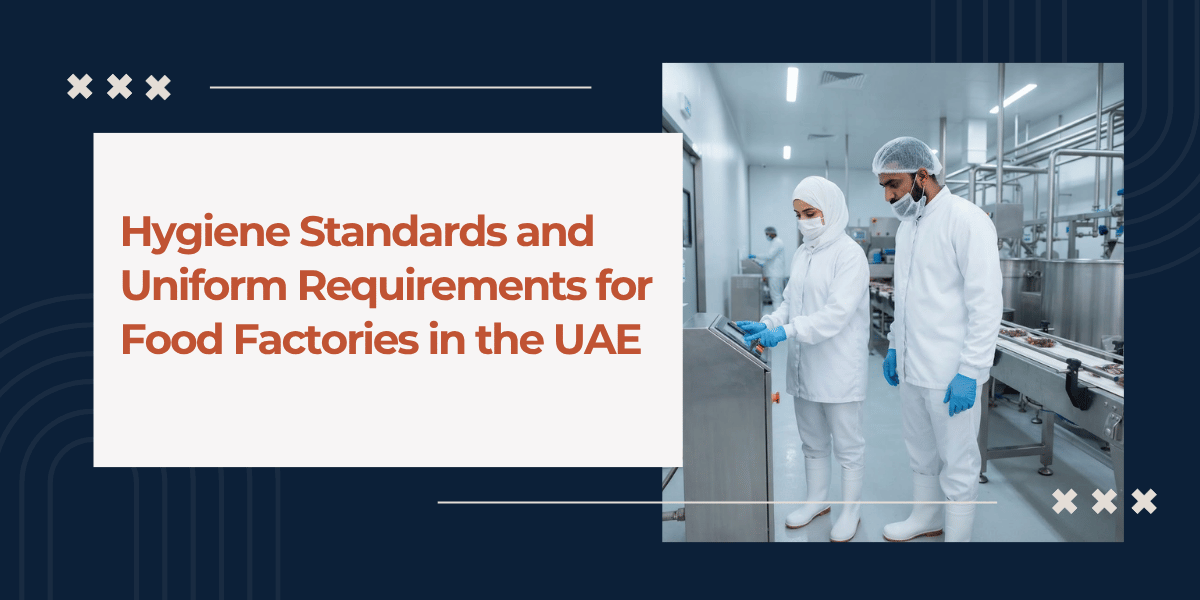
Construction worker uniforms definitely need reinforced knees and tool loops to handle the job. Lab technicians should opt for static-resistant fabric to ensure safety. Meanwhile, food processing staff should prioritize hygiene standards over visibility.
A solid industrial uniform is designed around the actual tasks, not a generic template. This is especially true in the UAE, where scorching heat, strong sun, and lengthy shifts require fabric choices and styles far different from what you’d find in cooler areas.
Conclusion
Choosing the high-quality industrial uniform means looking beyond logos, colors, and appearance. The best workwear combines durable, task-appropriate fabrics, ergonomic construction, high visibility, relevant safety standards, easy maintenance, customization, and role-specific features.
Businesses should also consider climate, working conditions, washing requirements, and the risks employees face every day. For companies sourcing workwear in the UAE, uniform manufacturers in the UAE can provide solutions tailored to local working conditions and industry requirements.
Silver Thread UAEoffers customized workwear options for different workforce needs. If you’re planning a new uniform program, take time to compare materials, certifications, fit, customization, and supplier capabilities before you buy customized uniforms in the UAE.
FAQs
What fabric is best for industrial uniforms?
The best fabric depends on the worker’s tasks and environment. Choose durable materials with specific protection for heat, chemicals, abrasion, or flames.
Why is uniform fit important for industrial workers?
A properly fitted uniform allows workers to move comfortably while reducing snagging risks. It should provide enough room for movement without becoming loose or restrictive.
How can companies make industrial uniforms last longer?
Follow the manufacturer’s washing instructions and avoid products that damage protective treatments. Rotating multiple uniform sets can also reduce wear and extend their service life.