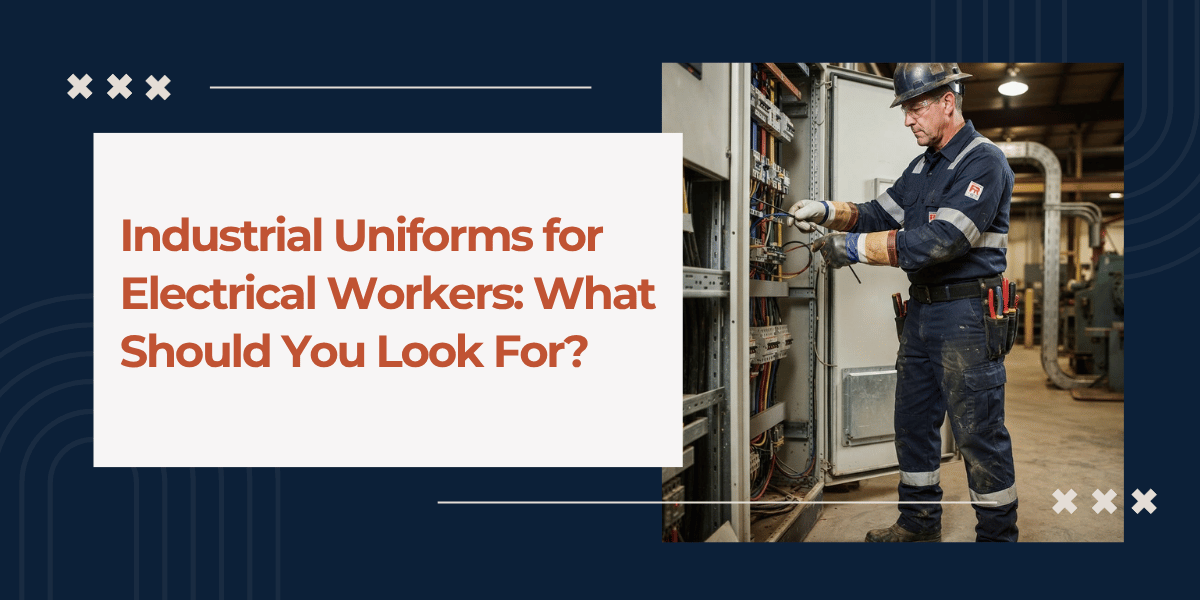
Many times, the reflective tape has saved you from getting hit by the wall or another car. Now, reflective tape plays a role in almost every industry, especially at night.
Previously, we explored the benefits of ergonomics in industrial workwear and discussed why flame-resistant uniforms matter for UAE industrial sites. These topics helped us understand how safety, comfort, and compliance work together in modern industrial clothing.
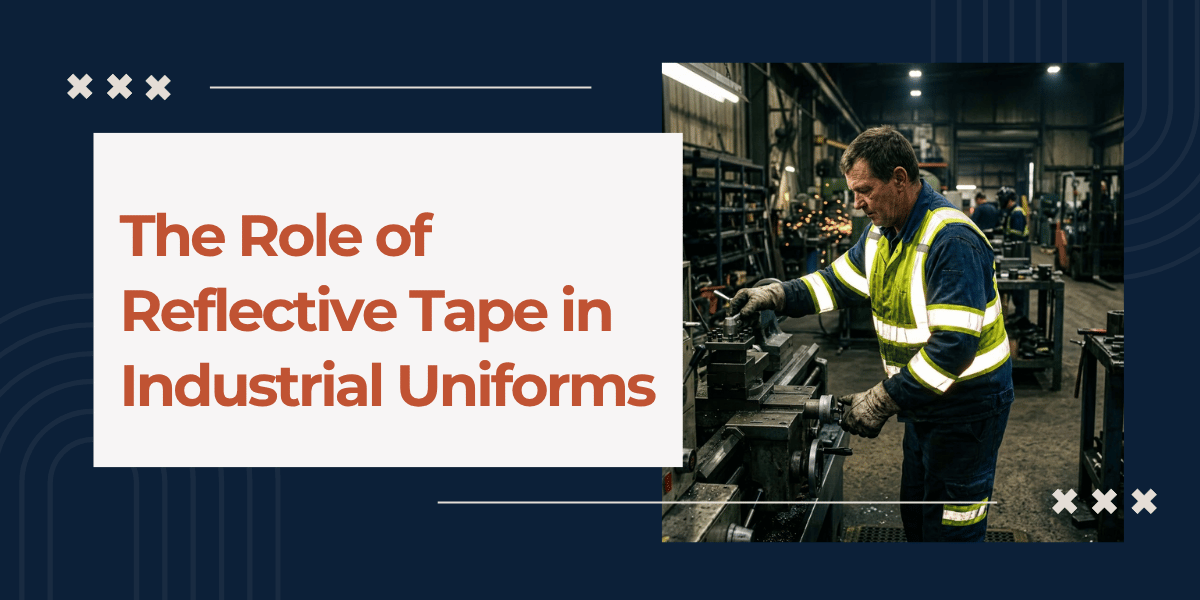
Today, we will focus on another critical safety element used across industrial environments: the role of reflective tape in industrial uniforms.
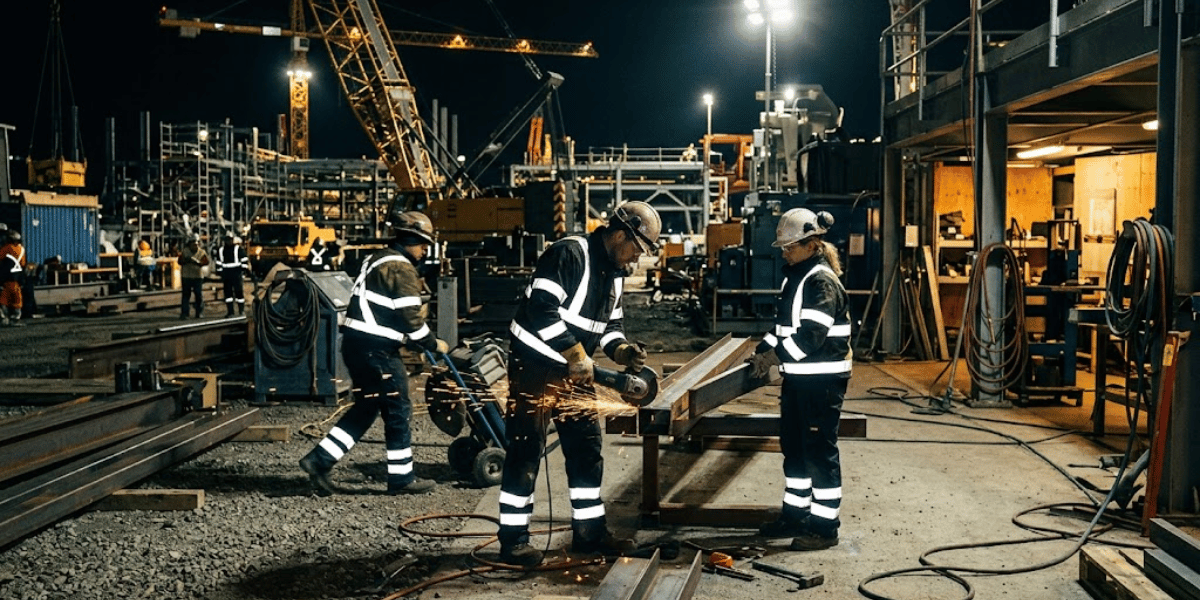
When you are driving on the highway or near a construction site, reflective taping is one of the most visible safety features on workers’ uniforms. In industrial environments such as factories, warehouses, logistics hubs, and oil & gas facilities, it plays a critical role in ensuring workers are easily seen in low-light and high-activity areas.
Why are they significant? Let’s look into the details and learn how it contributes to safety in industrial workwear.
Understand How the Reflective Tapes Work on Industrial Uniforms & Safety Wear
Most people think reflective tape on industrial uniforms just shines. It is more specific than that, and that understanding explains why tape placement and tape quality both matter.
Glass Bead Tape: Millions of tiny glass microspheres (usually 40-60 microns wide) are embedded in a layer of resin. As the light hits the curved face of each bead, it bends inwards, bounces off a metallic backing and heads back to the source. It is cheap and useful for common industry use.
Microprismatic Tape: Tiny corner-cube prisms etched in a polymer film redirect light with far greater precision. Very little light is scattered. It is lighter, more durable in wet conditions and the standard choice for high-risk environments such as active road construction.
Both of these operate on the principle of retroreflection, in which light is reflected back to the source rather than scattered in all directions.
A driver 150-200 metres away can see the worker clearly. From the side, almost nothing can be seen. Not a bug, this is a feature. The feature is to be visible to whoever is pointing the light source at you.
Why Tape Placement on a Uniform Is Not Personnel Decision
The human eye, especially at night, sees people by movement and by shape, not brightness alone. A vest with a basic chest band registers as an object. Add sleeve stripes, a torso band, and a brain; it instantly registers as a walking person. This is the basic level of importance of reflective tape on workwear.
Body height and shoulder stripes indicate the height of the person
Body orientation, bands on the back and front, indicate the direction the worker is facing
Limb movement, arm and leg stripes, tell observers the object is moving and is human
Poor placement, even on a garment with a technically compliant tape area, diminishes a worker’s ability to be quickly identified. That space between knowing and doing is where accidents happen.
What the Standards Actually Require for Reflective Tapes on Uniforms?
Two main international frameworks that any uniform suppliers in the UAE follow for reflective safety clothing for workers:
ANSI/ISEA 107-2020 (used primarily in North America)
EN ISO 20471:2013 (Europe and widely adopted in the Middle East and Asia). >
Garments are categorized into three performance levels based on the amounts of retroreflective material and fluorescent background fabric used.
Class 3 mandates 310 sq in of tape . This level is necessary for workers who are near high-speed traffic, active roadways, or in low-visibility areas.
When it comes to custom industrial uniforms, compliance often spans multiple standards. If your worksite has both visibility and flame hazards, the garment must be dual-certified, not just have a hi-vis label.
Additionally, standards require that the reflective tape withstand repeated washing.
If the tape fades or begins to peel after just 10 washes on a uniform that should last through a season, that’s considered a compliance failure, not just a quality problem.
Custom Uniforms: When Branding and Safety Intersect
Businesses in the UAE looking to get custom uniforms or to work with large teams often wonder whether they can mix branding with tape requirements. The good news is that it’s possible, but there are some rules to follow:
Logos and branding can’t be placed over or between the required tape bands.
The custom tape must have a minimum width of 50mm (2 in) for retroreflectivity, as specified by EN ISO 20471 and ANSI standards.
If you’re using heat-transfer reflective tape for custom logos, it has to be tested for the same wash durability as the sewn tape.
When it comes to construction uniforms with company logos, that’s pretty standard across UAE job sites. You can definitely have a fluorescent background, compliant tape bands, and a printed logo all together, it just means that you need to design the garments with all three aspects in mind right from the get-go, instead of just slapping the logo on later.
Conclusion
eflective tape plays a critical role in improving visibility, safety, and compliance in industrial environments where risks are high. From construction sites to roadside work, properly designed uniforms help prevent accidents and save lives.
Understanding standards and correct placement ensures maximum protection without compromising comfort or branding. For businesses looking to buy customized uniforms in the UAE, choosing reliable partners is essential.
Why is reflective tape important in industrial uniforms?
Reflective tape increases worker visibility in low-light or high-risk environments. It helps drivers and machinery operators detect workers early and prevent accidents effectively.
Where should reflective tape be placed on industrial workwear?
Reflective tape should be placed on the shoulders, chest, back, arms, and legs. Proper placement ensures full-body visibility from multiple directions for maximum safety.
Which industries require workers to wear uniforms with reflective tape?
Industries such as construction, logistics, road maintenance, and oil and gas require reflective uniforms. These sectors involve high-risk environments and low-visibility conditions.