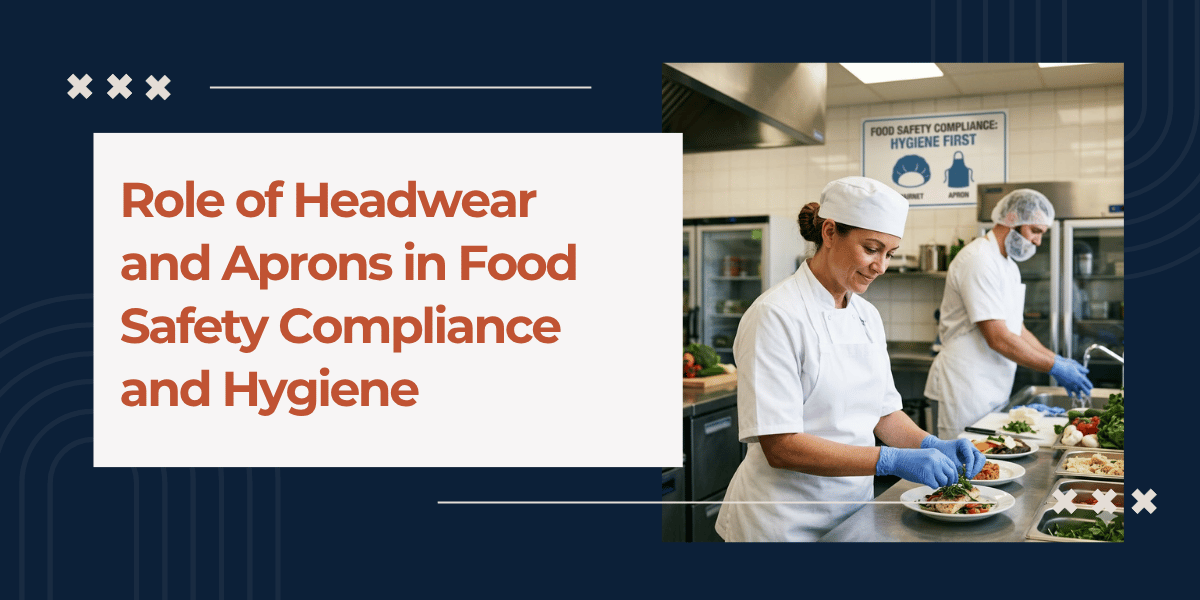
When you go to the restaurant or any food facility, you often see chefs and staff in headwear and aprons. You may also ask, “Why is this necessary?” Why are there penalties for not abiding by these regulations? Well, this might not feel necessary if you’re looking at it from the other side, but hygiene is a major concern for people.
One minor mistake can lead to major issues. A hair a chef can fall into the food or any other form of contamination might become an irresolvable issue.
So, how do headwear and aprons in food safety protect food? Let us help you understand it through these food safety compliance clothing guidelines.
Why Headwear Matters in Food Environments
Hair is one of the most common things that gets into food. A single strand can ruin an entire batch, prompt a customer complaint, or cause a facility to fail an audit. It helps you adhere to food safety headwear and apron requirements, and standards such as HACCP (Hazard Analysis and Critical Control Points) include these requirements.
So, how to know the importance of aprons and headwear in food hygiene?
Here is the idea for it:
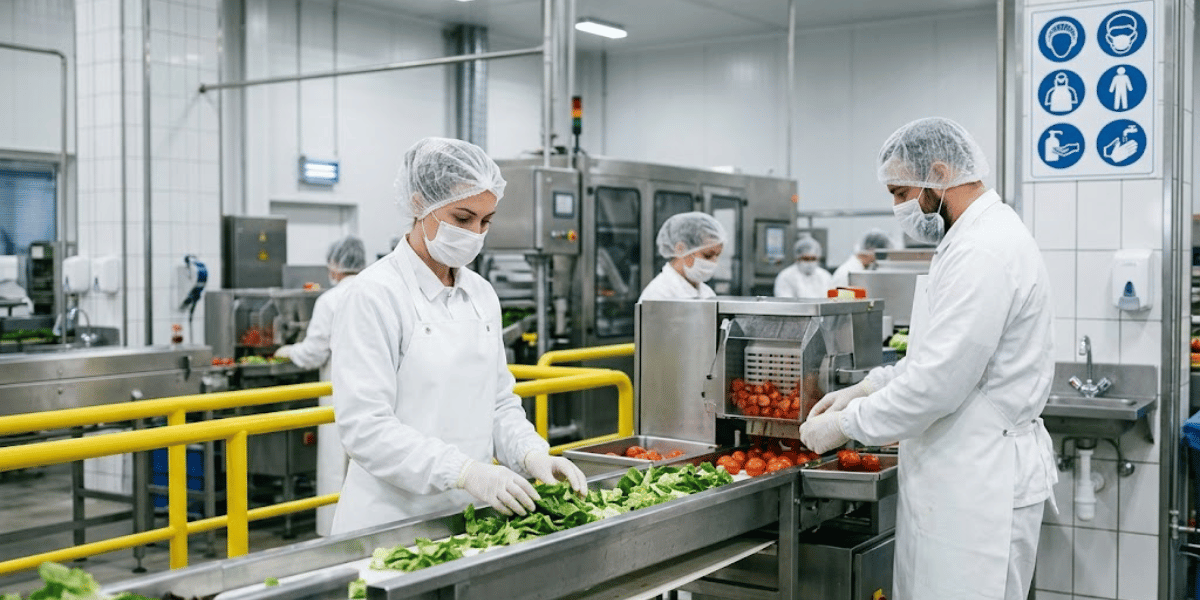
Hair nets are the bare minimum in most food facilities. They cover all hair, even facial hair.
Skull caps and bouffant caps are worn in places with a higher risk, such as where raw meat is processed or where food is prepared for consumption.
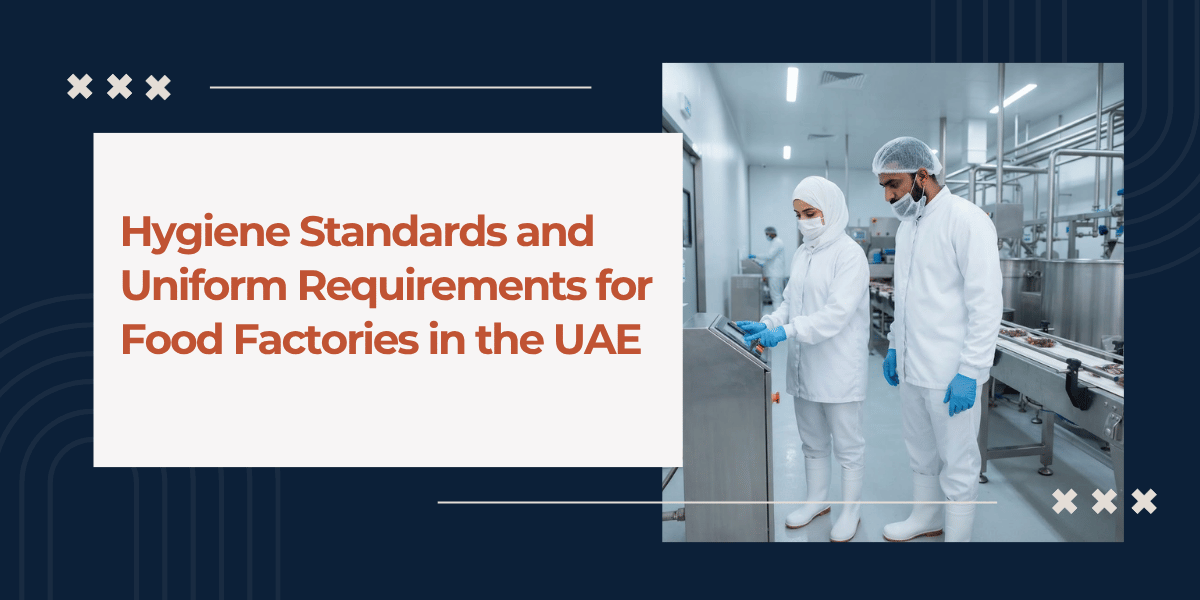
Full hoods are needed in places where hair, skin particles, or sweat could get into open products.
In food factories, where overhead hazards are also present, hard hats with built-in nets are used
The main idea behind HACCP-compliant uniformsis that every piece of clothing, even hats, must be checked for contamination risk and handled properly. You shouldn’t be able to see any hair outside of the covering. You should wear headgear before entering the production area, and it should be cleaned or replaced regularly.
The Function of Aprons Beyond the Obvious
Aprons and headwear are important for food hygiene for more than just keeping clothes clean. Aprons protect both the worker and the food. They keep dirt and germs from the worker’s clothes from getting into the food, and they keep the worker safe from spills, splashes, and sharp tools.
People usually choose aprons for food environments based on the job they need to do:
Plastic or rubber aprons are used in wet areas, for processing fish, or in areas with heavy liquid splatter.
Fabric aprons are good for preparing dry foods, baking, and doing general kitchen work.
Chain-mail aprons are used in places where cutting and slicing tools can cause serious injury.
Disposable aprons are used in situations with high contamination or where cross-contamination between areas needs to be stopped immediately.
When deciding between disposable vs washable food industry uniforms, the level of risk involved in the job is often a factor. For short, high-risk tasks, disposable options are best. For everyday use in controlled environments, washable aprons are better because they last longer and are more environmentally friendly.
Avoid external pockets, buttons, or any loose accessories that might accidentally fall into the products.
Use lint-free and non-shedding materials so you don't introduce any fibers into the production area.
Make sure they’re resistant to the specific chemicals used in cleaning and sanitizing.
Comfort and breathability are crucial because if protective clothing isn’t comfortable, people might not wear it correctly.
Bright colors or detection features are necessary when materials need to be metal- or X-ray-detectable
These considerations go beyond looks; they’re based on practical safety needs. For operations considering their options, it’s a good idea to make a careful comparison of uniforms from different suppliers in the UAE. You might find some big differences in the quality of materials, compliance certifications, and overall durability.
Color-coding Uniforms in Food Processing
One of the best ways to keep food production safe and clean is to use color-coded clothing. The concept is pretty simple: different areas or tasks, such as those that handle allergens, get their own specific colors for items like aprons and hats. So, if someone moves from one area to another, they switch to the right color for that zone.
One may also focus on white vs. color-coded uniforms, as it is worth considering. White does have its benefits; any stains or spots are easy to spot, which is great for inspections. But on its own, white doesn’t tell you much about different zones.
That’s where color coding comes in handy. You might see blue for raw meat sections, yellow for allergen areas, and green for parts that handle ready-to-eat food. This system definitely helps cut down on mix-ups and shows right away if someone’s in the wrong part of the facility.
For a color system to work well, it needs to be clear, included in staff training, and fit well within the facility’s overall clothing guidelines for food safety.
Conclusion
In conclusion, headwear and aprons play a vital role in maintaining hygiene, preventing contamination, and ensuring compliance in food environments. From production floors to commercial kitchens, the right protective clothing supports both safety and operational efficiency.
Companies like Silver Thread UAEprovide dependable solutions tailored to the food industry’s needs. Ultimately, proper use of headwear and aprons ensures safer food handling and consistent quality standards.
FAQs
Why are headwear and aprons important in food safety?
Headwear and aprons help prevent contamination from hair, dust, and clothing. They protect both food products and workers while ensuring compliance with hygiene standards.
What type of apron is best for food processing environments?
The best apron depends on the work environment and risk level. Waterproof aprons are suitable for wet areas, while disposable ones are ideal for high-contamination tasks.
How often should food safety uniforms be cleaned or replaced?
Food safety uniforms should be cleaned regularly based on usage and contamination risk. In high-risk areas, they may need daily replacement to maintain hygiene standards.