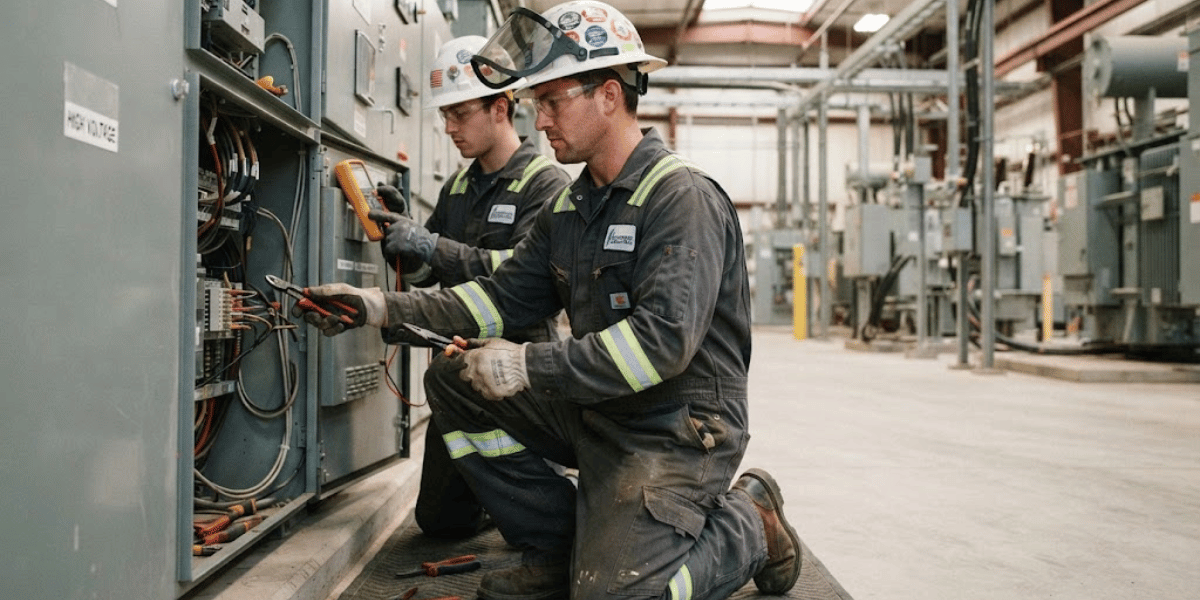
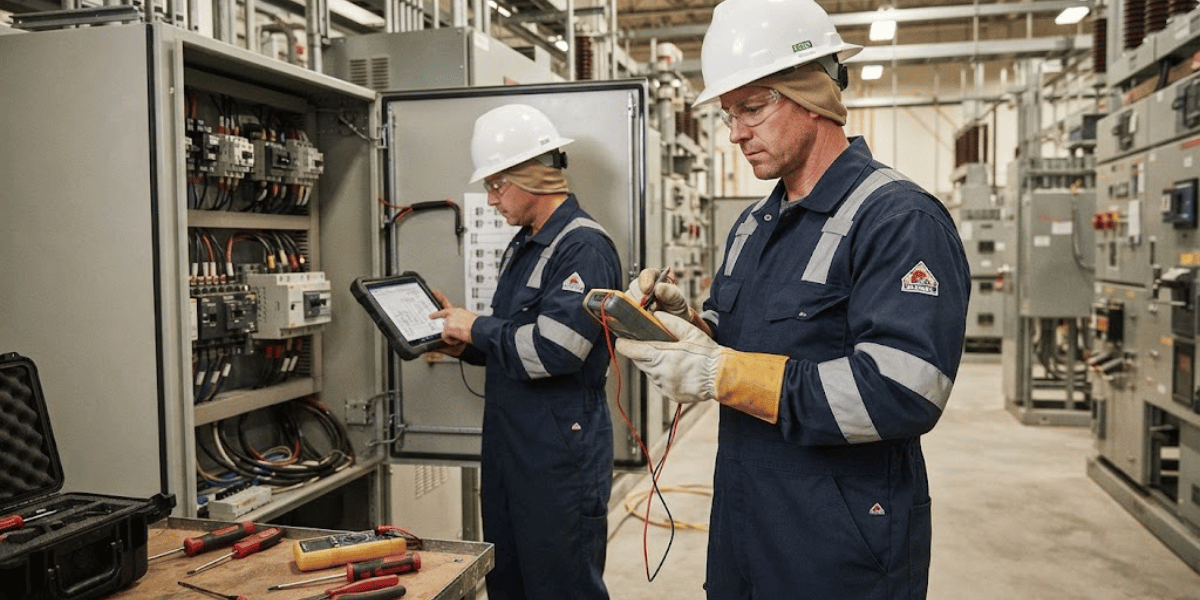
Industrial Uniforms for electrical workers work best when they’re built for the job. These uniforms need to be flame-resistant, arc-flash-rated, and static-resistant while still offering comfort throughout the workday.
In a fraction of a second, arc flash releases intense heat. Meanwhile, a normal polyester shirt can melt onto skin.
So, the question is: what should industrial uniforms for electrical workers have?
First, consider the hazards workers might encounter on the job. Electricians working around energized equipment, switchboards, power lines, machinery, or industrial systems may be exposed to arc flashes, sparks, flash fires, and extreme heat.
Workers may need flame-resistant or arc-rated clothing for these environments. These fabrics resist ignition and minimize flame spread. Normal synthetic fabric may melt in extreme heat, causing more severe skin damage.
When choosing industrial uniforms for electrical workers, please keep the following in mind:
Make-up material.
Arc-rated or flame-resistant characteristics.
Applicable testing and certification data.
Suitability for the expected electrical hazard.
Compatibility with other PPE and clothing layers
Care & Washing Instructions
Base this protection on a workplace risk assessment. Don’t choose a uniform because it looks tough or is marked ‘safety wear’.
Workers should also avoid loose sleeves, open cuffs, dangling accessories and exposed metal jewellery while working near electrical systems.
Wear uniforms with the correct PPE, including insulated gloves, safety boots, safety glasses, helmets, and face shields as needed.
2. Choose a Comfortable and Practical Fit
Electrical workers regularly climb, kneel, bend, stretch, crawl, and reach overhead. It’s crucial that their clothing supports these movements without being too tight or causing any snagging issues.
The benefits of ergonomics in industrial workwear are clear: better mobility, reduced physical strain, enhanced comfort, and fewer distractions when tackling challenging tasks. Ergonomic workwear can include:
Flexible knees for easier bending.
Elastic stretch panels.
Gusseted crotches for greater leg freedom.
Action back support for reaching and stretching.
Cuffs and waistbands, adjustable.
Reinforcements on elbows, knees, and seat.
A good uniform, like industrial coverall uniforms, should fit just right, not too loose and not too tight. Oversized clothes can get caught on machinery, ladders, or equipment, while tight clothing can hinder movement and become uncomfortable during long hours.
Employers should offer a wide variety of sizes and consider different body shapes. It’s also helpful to let employees test out sample garments before making a bulk purchase.
3. Fabric Matters More than Style
Naturally flame-resistant fabrics, like aramid blends and modacrylic blends, maintain their protective qualities throughout the garment’s lifespan. FR-treated cotton is another option, but be careful: if you wash it the wrong way, the treatment can wear off.
It’s best to avoid untreated polyester and nylon for both the outer layer and what’s underneath, as these materials can melt and cling to your skin. Even wearing a protective jacket over a synthetic T-shirt can pose a risk.
4. Visibility and Reflective Details
High-visibility workwearis essential for electricians working outside, especially when they’re near traffic or in dim lighting. The key standard to remember is EN ISO 20471, which divides clothing into three classes based on the amount of visible material.
When electricians work alongside other trades, hi-vis regulations will likely align with those for construction worker uniforms.
How to Choose Uniforms for Electrical Workers
If you are trying to learn how to pick uniforms for electrical workers from uniform manufacturers in the UAE, go through this order:
Identify the work and the arc energy.
Then match the arc rating and class to that energy.
Confirm requirements for flame resistance, antistatic, and hi-vis where appropriate.
Test fit through full range of motion.
Require test certificates from accredited laboratories.
The employer is responsible for industrial uniforms and compliance. It’s a good idea to confirm the specific requirements with your safety officer, the site owner, and any utilities involved, as these can differ from project to project.
Start by following the care label closely. Remember, bleach and fabric softener can actually damage some flame-resistant (FR) treatments.
Keep your garments free of oil, grease, and fuel, as these substances can increase flammability.
Regularly check for any holes, thin spots, or frayed seams. If you find any, repair them using only FR-rated materials.
Don’t hesitate to retire any garments that are too worn or burned.
Always wash your workwear separately from heavily contaminated items.
Flexible knees for easier bending.
Elastic stretch panels.
Gusseted crotches for greater leg freedom.
Action back support for reaching and stretching.
Cuffs and waistbands, adjustable.
Reinforcements on elbows, knees, and seat.
Conclusion
Choosing the right electrical worker uniforms is about more than creating a professional appearance. Workwear should match the job’s hazards while providing appropriate flame resistance, arc-rated protection, visibility, mobility, and durability.
Before placing a bulk order, employers should consider the work environment, required PPE, relevant standards, fit, fabric, and maintenance requirements. Strong industrial workwear safetypractices also depend on regular inspection and proper garment care.
Whether you work with uniform suppliers in the UAE or plan to buy customized uniforms in the UAE, always prioritize protection and suitability for the task.
FAQs
Why do electrical workers need specialized uniforms?
Electrical workers can face hazards such as arc flashes, sparks, heat, and fire. Specialized clothing helps provide protection appropriate to the identified workplace risks.
Can electricians wear regular cotton clothing?
Yes, seasonal uniforms can improve rider comfort and performance. Lightweight, breathable clothing works well in heat, while insulated, water-resistant layers provide protection in colder weather.
How often should electrical workwear be inspected?
Inspect garments regularly for holes, burns, frayed seams, contamination, or other damage. Any clothing showing significant damage should be repaired appropriately or removed from service.