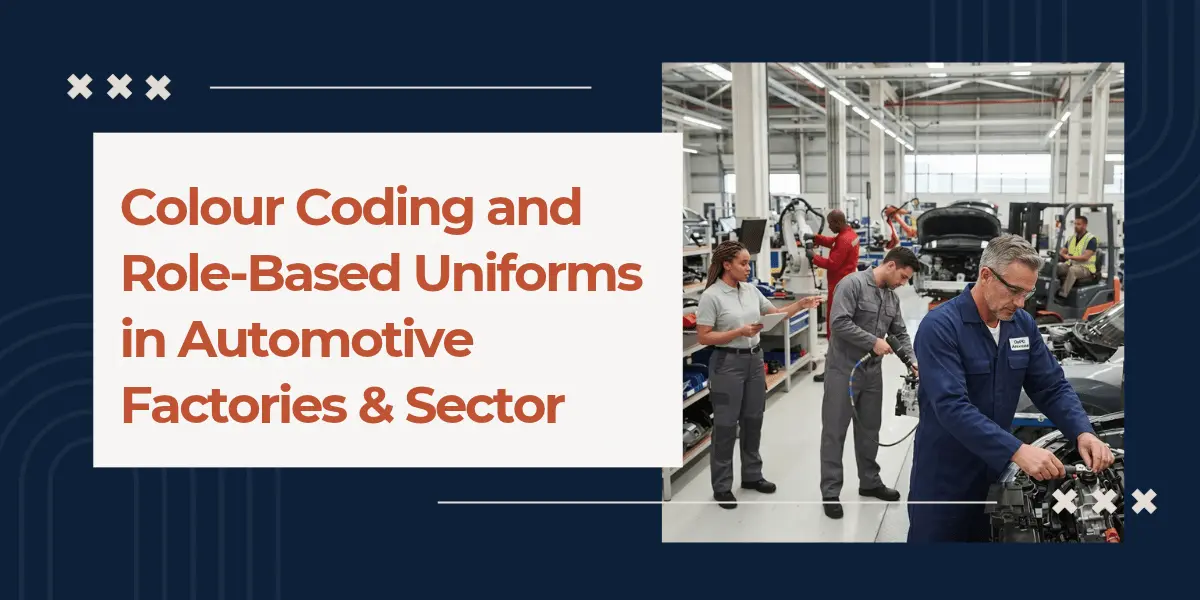
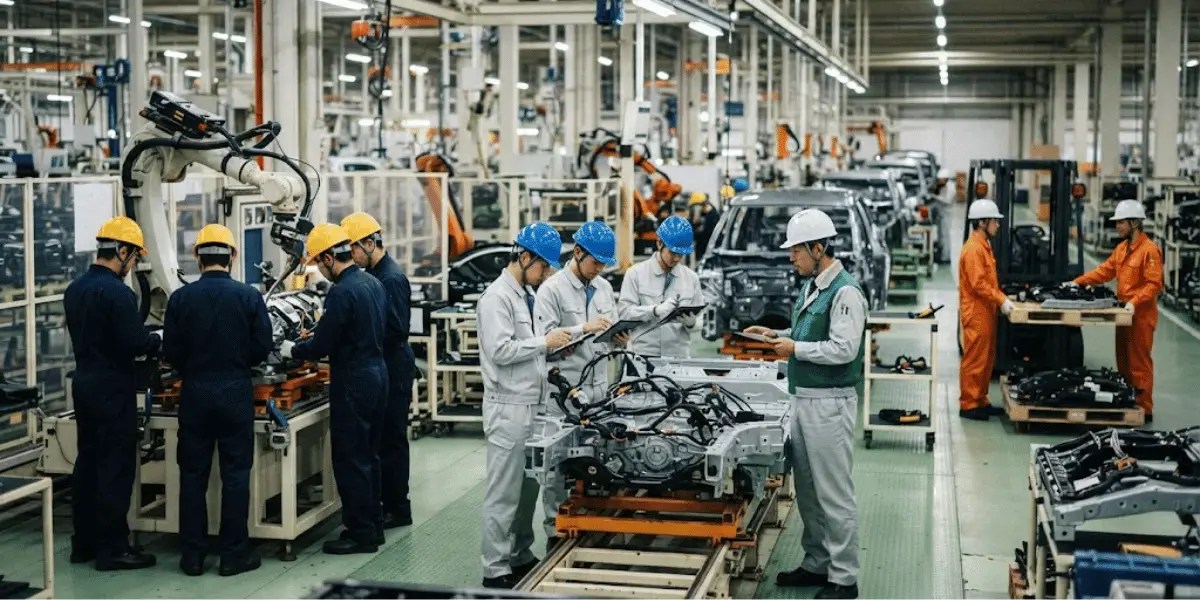
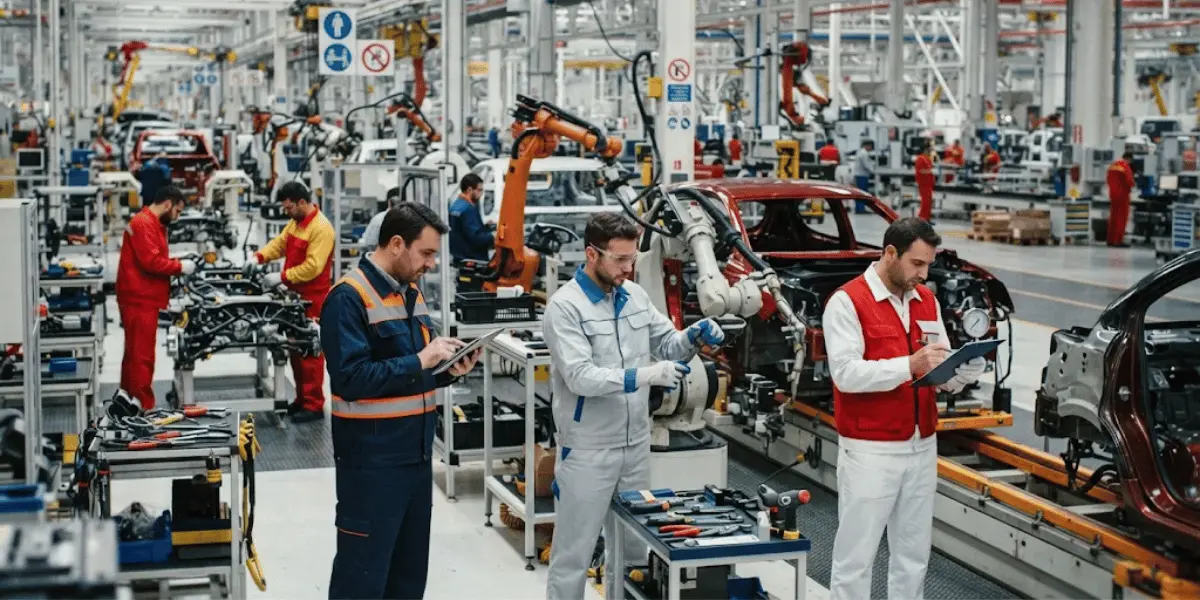
When you walk into a car assembly floor, the apparel says a lot before anyone speaks. A white coverall in the paint booth, a high-visibility vest in the forklift lanes, and a navy two-piece set on the engine line.
Role-based uniforms in automotive factories help to separate jobs, reduce confusion, and match each worker to the hazards of their station. Because there is no universal standard for colour, each manufacturer creates their own scheme. Here’s how colour-coded uniforms in automotive factories function and what to look for before buying clothes.
Importance Of Industrial Uniforms In Automotive Manufacturing
Recipient, Budget, Deadline: Clients and government contacts want presentation, but staff want something they’ll still use in March. Before you pay a deposit, check these:
Car plants have heat, sparks, oil, moving machinery, and vehicle traffic all under one roof, and clothing is the first layer of defence against most of it. Loose sleeves can snag on rotating parts. Synthetic fabric can melt to skin in a welding arc.
Clothing also protects the product from visible paint defects caused by lint or skin oils and damage to electronic modules caused by electrostatic discharge. Uniforms also help supervisors identify strangers in restricted areas.
How Does Colour Coding Help Identify Workers In Automotive Factories?
The colour is always a clear distinction regardless of the industry. So, it gives a visual cue to anyone entering the factory. These colours vary from plant to plant, making it easy to spot the right representative.
Assembly and machining operators: One basic colour per department
Paint shop staff: White or light coveralls that stain and show dust quickly
Maintenance technicians: A different colour to easily find during a breakdown
Quality inspectors: A different colour or collar
Logistics and forklift drivers: High-visibility fluorescent yellow or orange
Logistics and forklift drivers: High-visibility fluorescent yellow or orange
Hi-vis, however, has this solid standard. Visibility requirements come from authorities, and factories need certifications for their uniforms. This certification usually specifies minimum requirements for visibility and reflectivity. Everything else can be quite simple; therefore, many plants stick to 5-6 colours.
What Types Of Uniforms Are Suitable For Different Roles In The Automotive Industry?
Start with hazards and then choose the right fit.
Body-shop welders need flame-resistant garments, commonly certified to EN ISO 11611.
In paint shops, workers need lint-free coveralls without exposed metal fastenings.
Electronics and sensor assembly staff need anti-static and fire-retardant workwear for automotive production, as friction between fabrics can build up a charge.
Yard and forklift crews need hi-vis, while showroom staff can stick to tailored clothing.
That’s the basis of well-planned role-based uniforms in the automotive industry: identify the risks first, then choose the colour and cut.
Mechanic Overalls vs. Two-Piece Sets - Most Common Types of Uniforms
You probably already have overalls in mind for your industry, and your staff is wearing them. This type of uniform covers the whole torso, so when a mechanic has to slide under a car, it doesn’t get messed up.
With no gap between the shirt and trousers, oil or grease can remain on the coveralls. However, they can be hotter and will take longer to remove on bathroom breaks.
On the other hand, some workshops and factories opt for two-piece sets. These sets offer better ventilation, and a stained shirt can be swapped out without changing the trousers.
So, overalls are great for underbody and engine work, while 2-piece remains great for diagnostics and lighter services.
Dealerships, Showrooms And Car Washes: Understand the Difference
The right uniform for each depends on the role. For example, car showrooms can opt for tailored blazers, fitted polos, or shirts in the core brand colours.
Hot weather shapes workwear choices across the Gulf. Lightweight, breathable materials help keep workers comfortable in outdoor yards and workshops, where summer temperatures often climb above 40°C.
So, for fabric quality and durability, or any uniform customization options, consider the environment of both the factory and the overall area.
Automotive uniform suppliers in the UAE should provide sample garments and be upfront about minimum order quantities.
Before buying customized uniforms, check the lead times and choose colours by reference code rather than name, since “navy” can differ from one dye lot to another.
Keep spare stock for every role, too; staff leave, sizes change, and running out of the right colour can undermine the system in no time.
Mechanic Uniform Care Tips
How you care for a garment affects how long it lasts, and whether its protective features still work. For role-based uniforms in automotive workshops, keep these habits in mind:
Wash oily garments separately from other clothing.
Treat grease and oil stains before the main wash.
Avoid fabric softener on flame-resistant or anti-static garments. It can coat the fibres and reduce their protective performance.
Don’t use chlorine bleach unless the care label says it’s safe.
Check for worn knees, frayed cuffs, and damaged reflective tape.
Replace any garment that’s no longer in good condition. If an automotive work uniform with a safety rating fails these checks, retire it rather than repair it.
Conclusion
Choosing the right role-based uniforms in automotive factories goes beyond appearance. Colour coding, fabric quality, and role-specific designs help improve workplace safety, comfort, and organization.
Whether you need flame-resistant coveralls, anti-static clothing, or high-visibility garments, selecting the right materials makes a difference. If you plan to buy customized uniforms in the UAE, Silver Thread UAE can help you explore suitable options for different workplace requirements.
Why do automotive factories use different uniform colours?
Different uniform colours help identify departments, job roles, and visitors quickly. They also make supervision easier and help restrict unauthorized access.
How often should automotive workers replace their uniforms?
Uniforms should be replaced when they are damaged, worn, or no longer provide adequate protection. Regular inspections help identify issues before they affect workplace safety.
Can automotive factory uniforms be customized with company logos?
Yes, many automotive factories customize uniforms with company logos and department identifiers. Placement should remain practical and must not interfere with protective features.