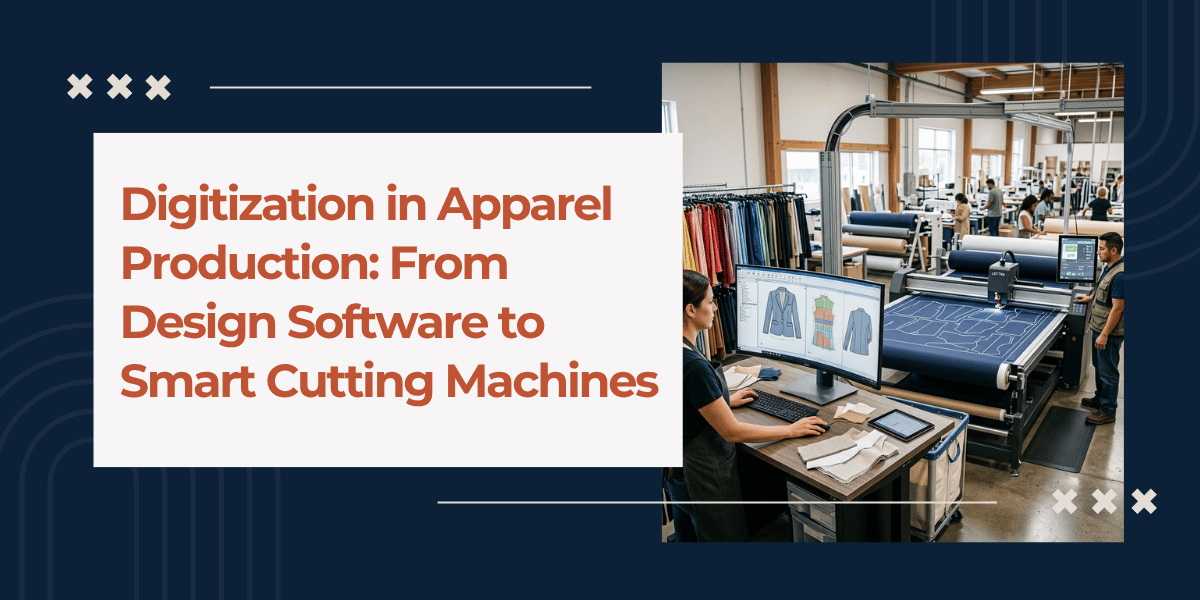
For decades, a garment design began on paper: a hand-drawn pattern, a paper marker, and a stack of cloth cut along pencil marks. While these traditional methods laid the foundation for garment manufacturing, growing demand for accuracy, faster production, and consistent quality has pushed the industry to adopt digital solutions.
Previously, we explored the importance of uniforms as marketing tools and highlighted the corporate uniform reordering process as key to maintaining consistency and brand identity. Today, we will discuss digitization in apparel production and how modern technology is transforming garment design, pattern making, and cutting processes.
Digitization in apparel production replaces the chain with a single file that travels from the designer’s screen to the cutting table. Errors decrease, repeat orders become easier, and less fabric ends up on the floor.
How is Digitization Transforming Apparel Production?
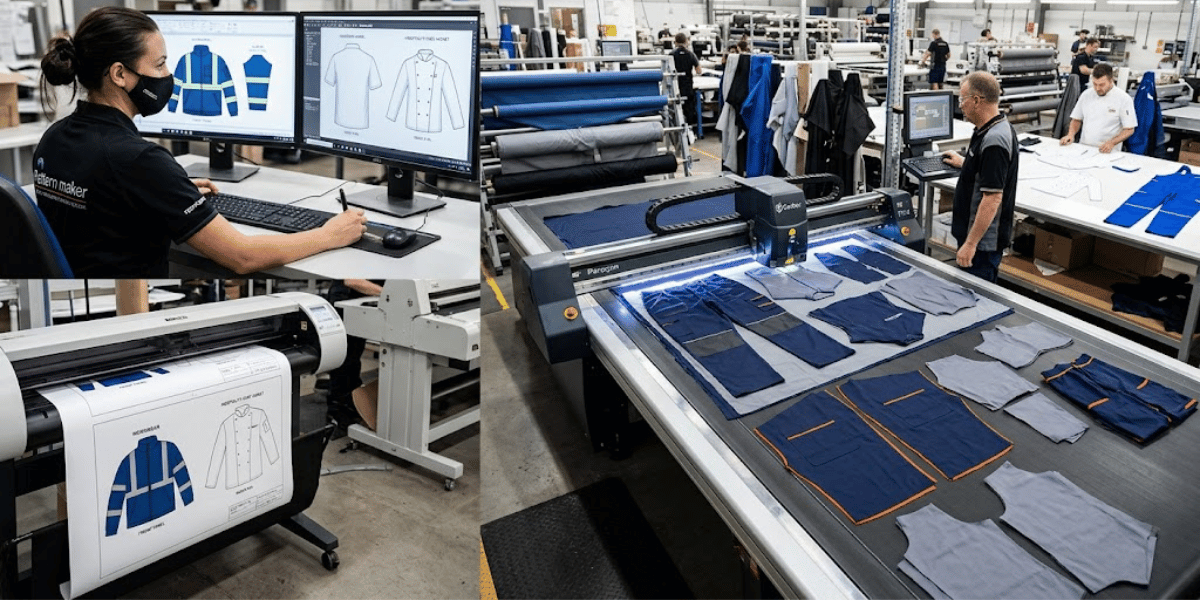
It eliminates the need to redraw between steps. A style is created once as a digital pattern, graded to sizes, placed into a marker, and sent to a cutter without anyone tracing it again. This ensures every production stage uses the same accurate data, reducing the chance of errors during handoffs.
Then the practical effects are simply enumerated
Fewer physical samples, as fit can be checked on a 3D avatar first
Faster approvals, with buyers reviewing files rather than waiting for couriers
Computer-optimized patterns mean less fabric
Traceable orders. Each bundle of cut pieces can be scanned
Fabric is usually the single biggest expense in a garment, so a small gain in layout efficiency adds up over thousands of pieces.
What Software is Used in Digital Garment Manufacturing?
Digital technologies in garment manufacturing are stacked, and most factories build them one at a time. In apparel manufacturing, digitization usually begins with pattern software and then moves outward.
Pattern CAD: Gerber AccuMark, Lectra Modaris, and Optitex do pattern drafting, grading, and marker making.
3D Design: CLO and Browzwear simulate drape and fit on virtual bodies in 3D design.
PLM and ERP: Tech packs, bills of materials, and order status are all in one system, not spread across spreadsheets.
Production Tracking: Barcode or RFID bundle tickets show each order’s location in the line.
And don’t forget marker-making modules. They lay pattern pieces out across the full width of the fabric and test thousands of arrangements in minutes, something a person would do once and accept.
How do Smart Cutting Machines Improve Garment Production Efficiency?
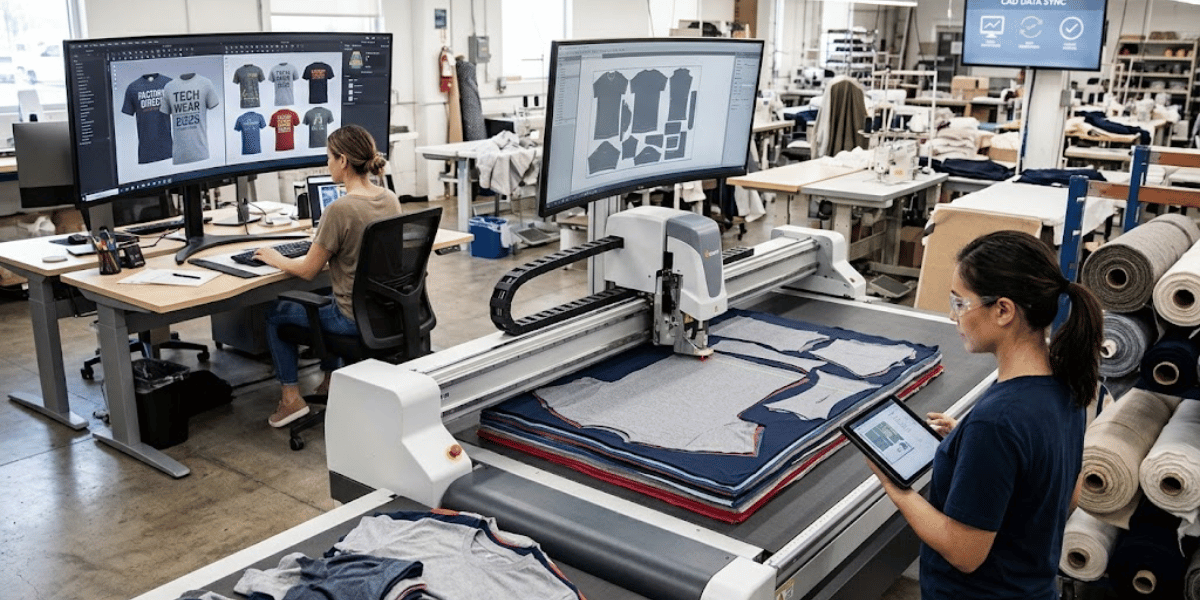
A smart cutter reads the marker file and makes precise cuts along it. Automated cutting machines for apparel production generally fall into two main categories: multi-ply knife cutters for stacked woven or knit fabrics, and laser cutters for single-layer tasks like appliqué and technical textiles.
The benefits of these machines can be seen in several areas:
Pieces in a stack align perfectly, which means sewing operators deal with fewer mismatches.
Efficient nesting minimizes waste between the pieces.
The cutting room relies less on the expertise of a single skilled cutter.
Using the same file ensures consistent results for repeat orders.
We can’t ignore the cost factor here. These machines come with a hefty price tag, and they only start to show a return on investment when your production volume is steady. If you’re running a small workshop that cuts only a few hundred pieces a month, you might be better off starting with CAD markers and a manual cutter.
What This Means for Uniform Buyers in the UAE
Uniform orders are a perfect fit for digital production. Sizes and logos tend to repeat, and with staff turnover, people often reorder the same styles. A uniform manufacturer in the UAE that keeps patterns and cutting files on hand can easily recreate a style months later without remeasuring anyone.
If you’re comparing uniform suppliers in the UAE, it’s smart to ask whether they store each style as a file, as this will determine how consistent the next batch will look. This is equally important when buying customized uniforms in the UAE, where matching logos and colors across multiple deliveries is crucial.
Different sectors have their own unique ways of utilizing technology:
Healthcare Uniforms: Scrubs come in a variety of sizes, so getting the grading right minimizes the need for alterations.
Hospitality Uniforms: With frequent replacements, maintaining consistent patterns and print placement is crucial.
Industrial Uniforms: Accurate cutting ensures that reinforced panels and pockets align perfectly.
Automotive Uniforms: Workshop attire needs consistent construction and durable fabrics to withstand wear and tear.
Standard-Fit Office Uniforms: A well-graded size chart ensures that everyone on a large team enjoys a predictable fit.
Files make it super easy to manage role-based uniforms. For instance, a front-desk blazer, a kitchen jacket, and a driver’s shirt can all share a common pattern with just a few minor adjustments. This approach keeps workwear across departments consistent without starting from scratch for each piece.
When it comes to reordering corporate uniforms, the real savings kick in because the second order aligns perfectly with the first. On the other hand, cheap uniforms often come with hidden costs after delivery: mixed sizes, remakes, and replacement batches that don’t match the originals. That’s why the best uniform manufacturers in the UAE treat their pattern and cutting data like gold.
Questions to Ask Before Choosing a Supplier
Digitization in apparel production plays a big role in what you ultimately receive, so it’s a good idea to ask a few key questions:
Are patterns and markers kept in a digital format for each style?
Is the cutting process automated, and which fabrics does that include?
How do you ensure that repeat orders align with the original batch?
Is it possible to view a digital sample before starting bulk production?
Conclusion
Digitization in apparel production is transforming how garments are designed, cut, and manufactured, helping businesses achieve greater accuracy, reduce fabric waste, and maintain consistency across repeat orders.
From digital patterns and 3D design software to smart cutting machines, these technologies improve efficiency and product quality.
For businesses seeking reliable workwear and uniforms, understanding these processes can simplify supplier selection. Consider Silver Thread UAE when exploring uniform solutions tailored to different industries and workplace requirements.
Yes, digital patterns help maintain accurate measurements and consistent sizing across production batches. This reduces cutting errors and makes repeat orders more reliable.
Are automated cutting machines suitable for small clothing businesses?
Automated cutters can improve precision and reduce material waste during production. However, smaller businesses should compare equipment costs with production volumes before investing.
What should buyers check before ordering uniforms in bulk?
Buyers should review fabric quality, sizing options, stitching, and sample garments before approving production. They should also confirm delivery timelines and consistency for repeat orders with their supplier.