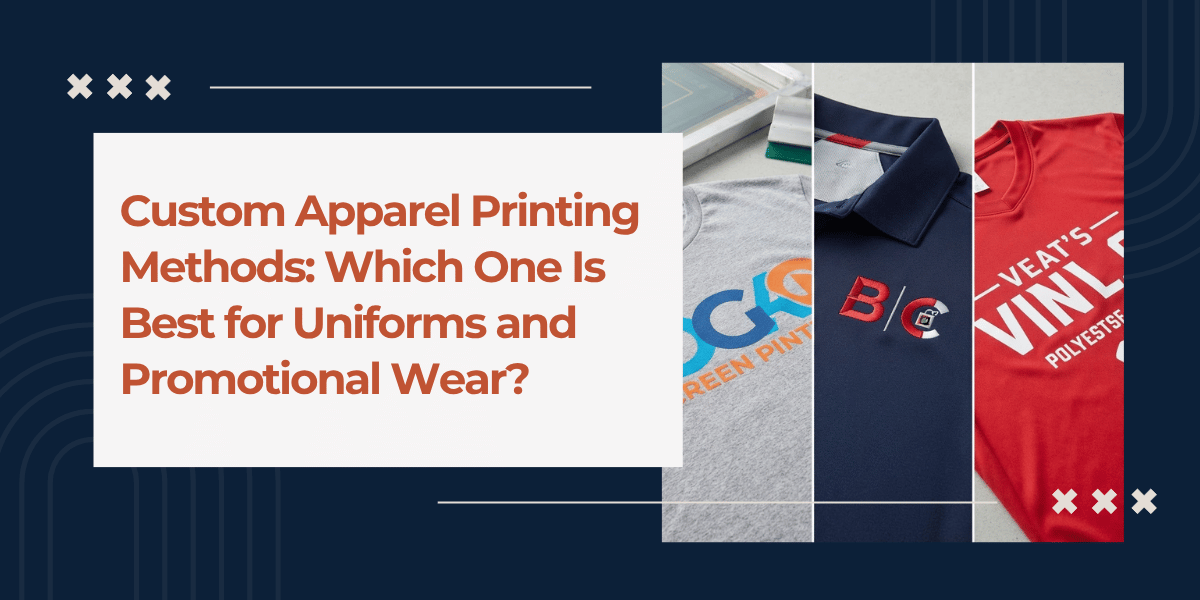
When you are choosing the uniforms, whether fabric for corporate uniforms or school uniforms, the quality and reliability of the fabric are quite significant. You have to keep in mind that this fabric will be used for industrial uniforms, sportswear, or other uniforms.
Previously, we explored the key differences between eco-friendly fabrics and moisture-wicking fabrics, helping you understand how material choice impacts comfort and performance. Today, we will shift the focus to another crucial factor that directly influences fabric durability and feel: GSM (Grams per Square Meter).
Whether you are looking for technical fabrics or need custom uniforms in the UAE, you need a standard that consistently meets the quality requirements of different industries.
Everything you need to know about how GSM affects fabric quality and which numbers to target for specific applications is broken down in this article.
What is GSM in Fabric?
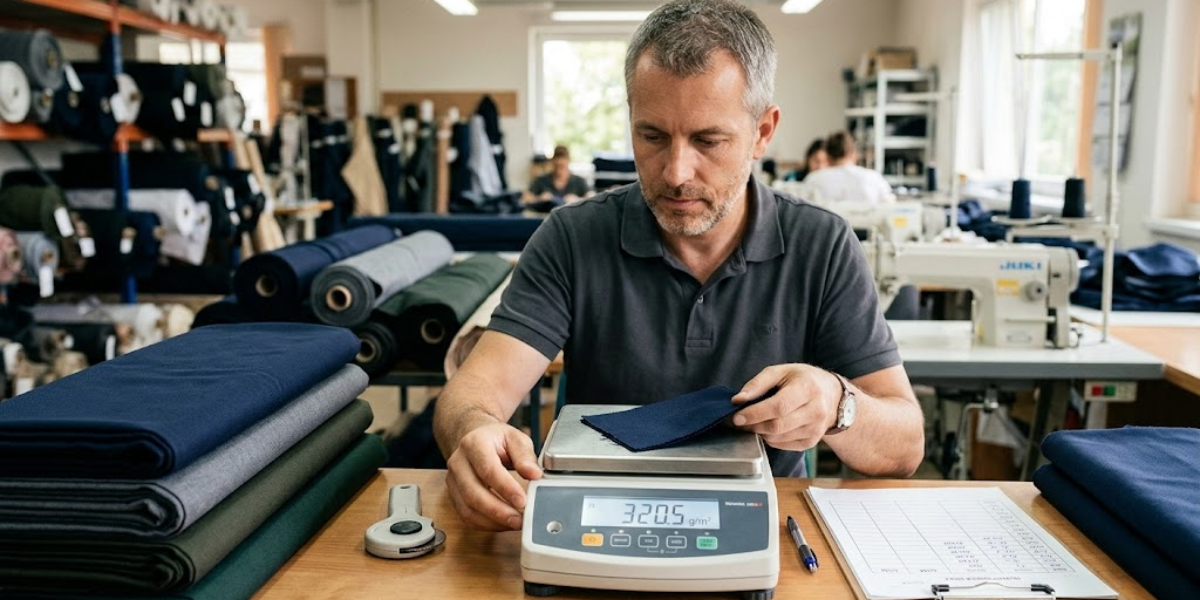
Grams per square meter is GSM. It is a standard for determining fabric weight. Regardless of a fabric’s size or shape, the textile industry uses this universal standard to compare them.
It tells you how much material is packed into a specific area, so think of it as a density measurement. A higher GSM indicates that the fabric has more mass, material, and overall substance.
How GSM Affects Fabric Quality
It is one of the best ways to determine the fabric’s weight and quality. How long will it last, and what products or items can be made using a specific GSM for fabric?
What do the numbers mean when looking for fabric?
1. Lower GSM fabrics (less than 150g):
This is lightweight and breathable. This is ideal for summer clothing, liners, and layering pieces. Under severe use, they are less resilient and more delicate at times. For this standard, you may consider thin cotton t-shirts or chiffon scarves.
2. Mid-range GSM (150–300g):
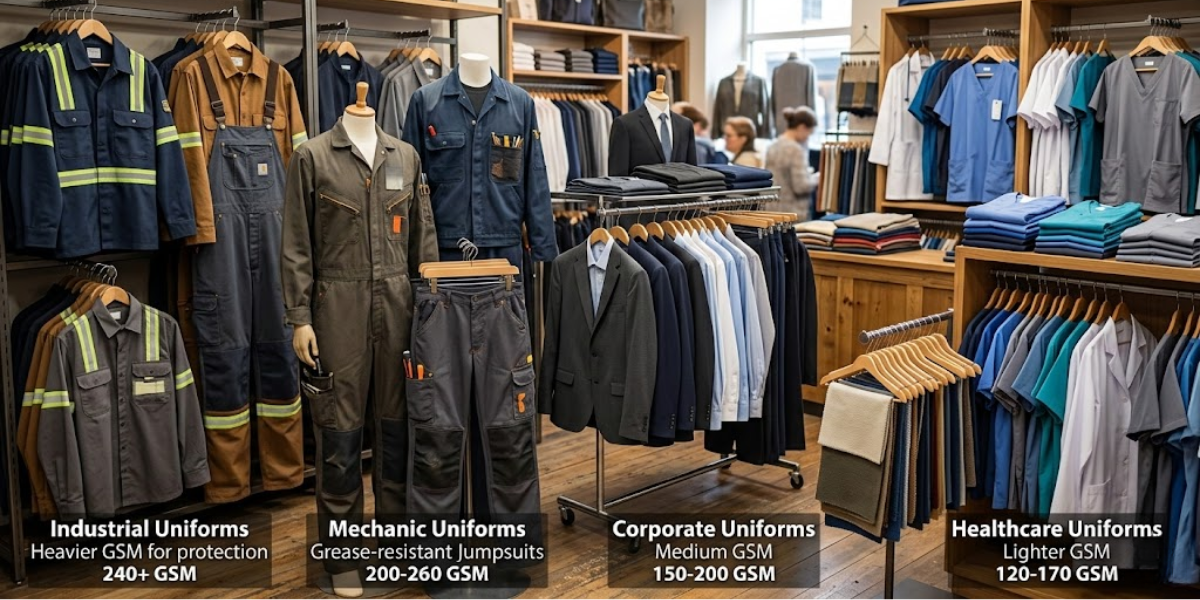
It is best suited for Standard t-shirts, dress shirts, and casual clothing. It is also one of the best fabrics for sportswear, such as training shirts or tops. A good t-shirt made from moisture-wicking fabric weighs between 180 and 220g. It is comfortable to wear while still being substantial enough to maintain its shape.
3. Heavy GSM (300g):
Fabrics weighing 300g or more have a higher GSM. This is now used for the best fabrics for industrial workwear. They are more reliable and often heavier than others. This is when you get denim, canvas, and heavyweight fleece sweatshirts. These materials are warmer, structured, and appropriate for workwear. They are more capable of enduring the constant strain.
How GSM Affects Specific Quality Factors
If you are considering how GSM affects specific quality factors, here is what experienced uniform suppliers in the UAEhave shared you need to know.
Durability:
Heavier fabrics tend to stand up better against wear, pilling, and tearing over time. For example, a 300g hoodie will last longer than a 200g one if they’re both put through the same conditions.
Opacity:
A higher GSM means the fabric is less likely to be see-through. This is especially important for white or light colours, as anything under 160g might become slightly translucent.
Drape and Structure:
Lighter fabrics have a nice flow and drape beautifully, while heavier fabrics maintain their shape. Neither option is necessarily better; it really comes down to what the garment’s design aims to achieve.
Warmth:
More material typically provides more insulation. Take a heavyweight flannel shirt at 280g, for instance; it keeps you much warmer compared to a 160g poplin shirt.
Softness:
GSM isn’t the only factor that affects how soft a fabric feels (the type of fiber and any treatments do too), but generally, a higher GSM can feel a lot more luxurious and substantial in your hands.
A Common Misconception
Just because a fabric has a higher GSM doesn’t mean it’s automatically better quality.
Like, a 400g fabric made from cheap cotton is still going to be low quality; it’s just heavy.
You really need to look at the fiber content, weave type, and finishing, along with GSM.
A well-made 180g fabric from high-quality long-staple cotton will usually feel and last way better than a poorly made 300g fabric.
High GSM vs Low GSM: Key Differences
Getting the difference between high GSM and low GSM fabric is pretty simple once you think about what having more material really means in real terms.
Property
Low GSM (under 150g)
High GSM (300g+)
Weight
Light
Heavy
Durability
Lower
Higher
Opacity
Sheer/see-through
Opaque
Breathability
High
Low
Warmth
Minimal
High
Structure
Flows and drapes
Holds shape
Cost
Generally lower
Generally higher
Best use
Summer wear, liners, sheers
Outerwear, industrial, workwear
Best GSM for Durable PVC and HDPE Fabric
When it comes to technical and industrial textiles, determining the right GSM for durable PVC and HDPE fabrics depends on how you plan to use them.
For PVC-Coated Fabrics:
It is used in tarps, truck covers, banners, and inflatables. They usually work best in the 400 to 650 gram range for most outdoor commercial uses.
If you're looking at anything below 400 grams, it’s more suitable for light-duty use or indoor applications.
On the other hand, if you go above 650 grams, you’re diving into heavy-duty territory, which includes things like mining covers and large shelters for infrastructure and marine uses.
Now, HDPE woven fabrics are a bit different because they’re lighter to begin with:
For shade nets or agricultural covers, you’re looking at 30-100 grams.
For medium-duty ground covers and safety netting, that’s more in the 100-200 grams range.
If you need geotextiles, bulk bags, or reinforcement fabrics, you should aim for 250 grams or more.
Ultimately, whether using PVC or HDPE, choosing the right GSM based on your load needs and the environment is key to deciding if a product lasts just one season or a whole decade.
Conclusion
Understanding GSM is essential when selecting fabrics for corporate wear, school attire, or healthcare uniforms. It directly impacts durability, opacity, comfort, structure, and long-term performance. However, GSM should always be evaluated alongside fiber quality and fabric construction.
Leading uniform manufacturers in the UAE recommend balancing weight with functionality to meet industry-specific requirements. Whether you need breathable summer fabrics or heavy-dutyindustrial uniforms, choosing the correct GSM ensures better value and longevity.
Silver Thread UAE emphasizes selecting fabrics that combine the right GSM with premium materials, helping businesses invest in uniforms that maintain quality, comfort, and professional appearance over time.
FAQs
What is GSM in clothing fabric?
GSM stands for grams per square meter and measures fabric weight. It indicates how much material is packed into one square meter of textile.
How does GSM affect the quality of apparel?
GSM influences the durability, opacity, warmth, and overall structure of clothing. Higher or lower GSM impacts how a garment feels, performs, and lasts over time.
Is a higher GSM fabric better for clothing?
Higher GSM fabric is not always better for every application. Quality depends on fiber type, weave, finishing, and how the fabric is intended to be used.