Safety is the major concern for delivery riders. More than reaching on time, it is important that their uniforms are not just stylish but also comfortable and convenient.
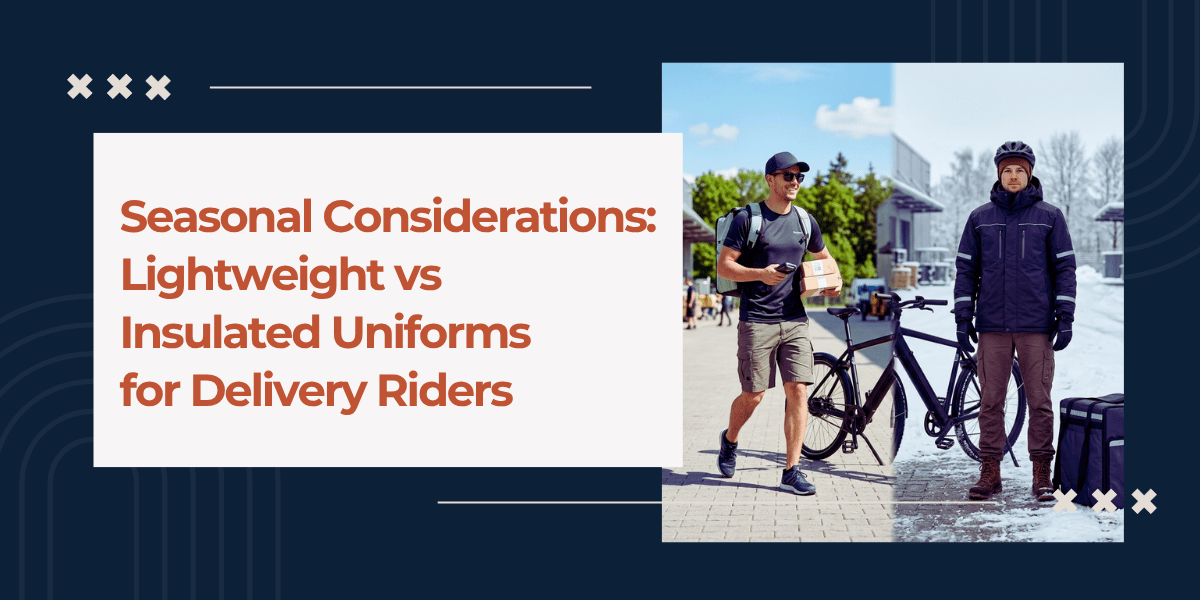
Previously, we discussed the importance of branded promotional apparel in the UAE and explored the uniform design process. Today, we shift focus to a practical, often-overlooked aspect of workwear: lightweight vs insulated uniforms for delivery riders.
The riders in the UAE are not often the locals; they come from many different ethnicities, trying their best to make ends meet. With uncomfortable uniforms while delivering products, they might be prone to many dangers.
To address the challenges and ensure the rider’s safety, uniforms should be designed with all seasonal considerations in mind. The weather in the UAE is often hot, but recently there was also a storm. Now, the industry is debating between lightweight vs insulated uniforms.
So, what kind of feature should be in a delivery rider’s uniform? This is exactly what we will be talking about.
Lightweight Vs Insulated Uniforms For Delivery Riders
When riders are on the road for every hour of the day, uniforms do more than just carry a company logo. These riders have to face the sun, dust, wind, and all kinds of shifting temperatures. Therefore, seasonal workwear for delivery riders is a must.
So, what are the best uniforms for delivery riders in summer and winter?
1. Summer: Lightweight Uniforms
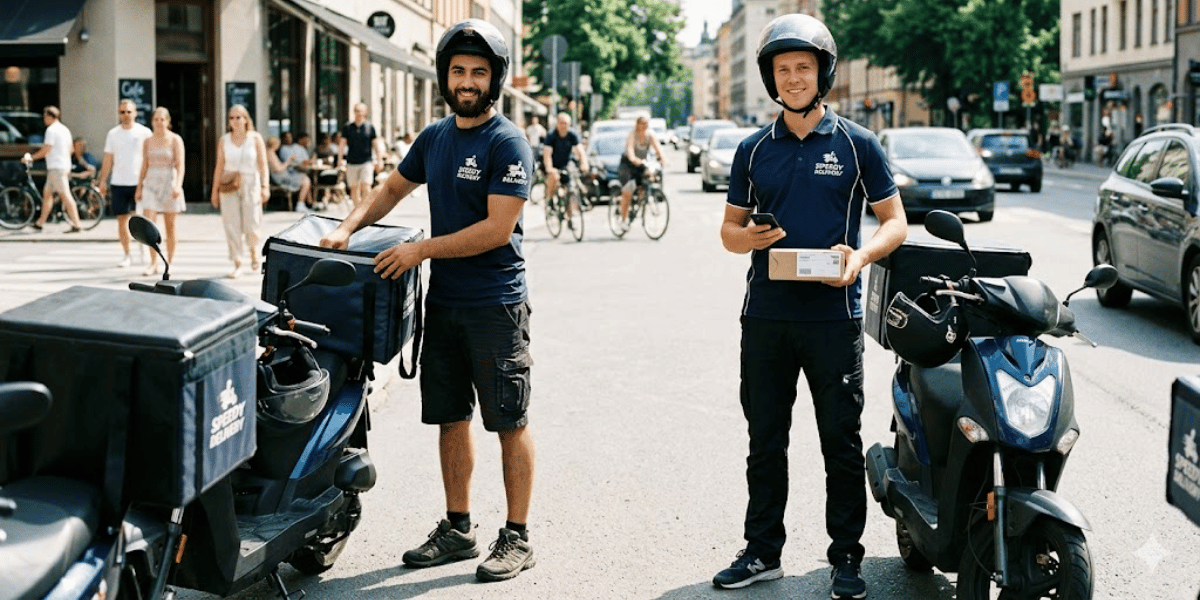
In the middle of summer, especially in the UAE, where temperatures can reach 45°C, breathable fabric is very important. This is where the difference between light and insulated uniforms is most clear. Lightweight uniforms prioritize airflow, moisture-wicking, and UV protection. They keep the body cooler and make it easier to work for long periods of time in the sun.
A good place to start is with T-shirtsand polos made of performance mesh or moisture-wicking fabrics. They move with the rider, dry quickly, and can carry your brand colours and logo without making them look bigger. Many uniform suppliers in the UAE now sell t-shirts and polos with moisture-management technology built into the weave. This means that the technology doesn’t wash out after a few cycles.
Fabric Choice: The Difference Between Polyester and Cotton
Cotton is a natural fabric; it feels soft against your skin and does a decent job of soaking up sweat. But here’s the catch: it keeps moisture close to your body. So, when it gets super hot, a wet cotton shirt can feel heavy and take a while to dry out. For riders making several stops in the blazing sun, that really makes a difference.
On the other hand, polyester does a great job of wicking moisture away from your skin and dries quickly. It keeps its shape, doesn't shrink much, and retains its color even after countless washes. The downside is that at really high temperatures, it might not let as much air flow through unless it's specially designed with breathable features. A lot of brands end up using a cotton-polyester mix to get the best of both worlds: the softness of cotton and the benefits of polyester.
Choosing the best option really hinges on your climate, your riders’ activity level, and how often you wash or replace items.
2. Winter: Insulated Uniforms
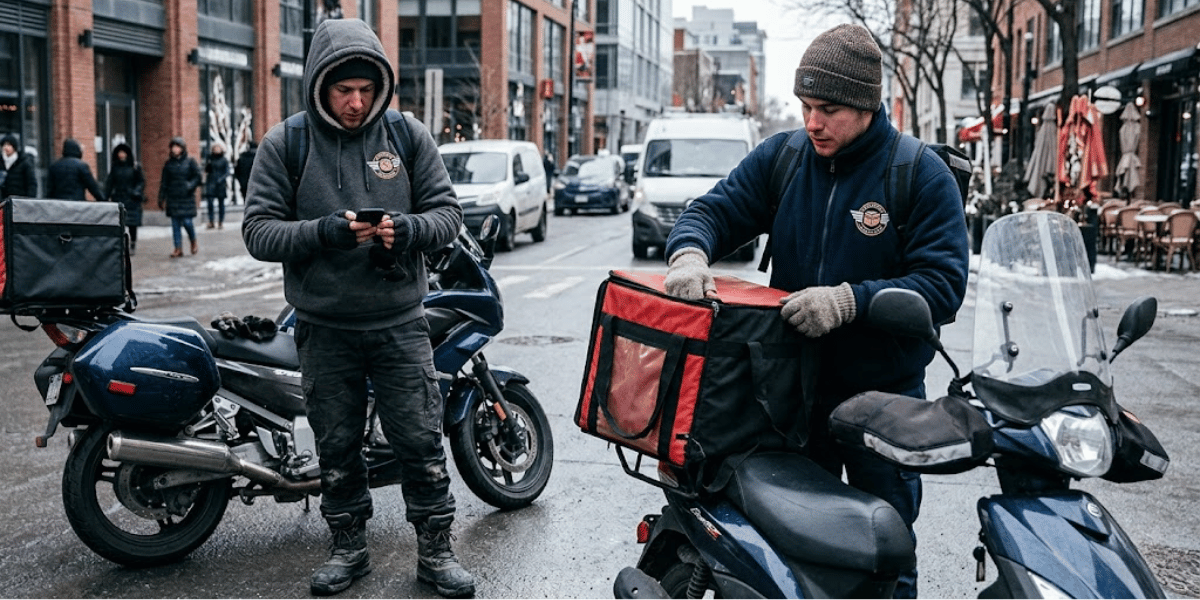
In the UAE, the cooler months, usually from November to February, can bring chilly mornings and evenings, especially for those riding bikes or scooters, since the wind can make it feel even colder. That’s when the insulated vs breathable delivery uniforms comparison really matters.
A good fleece-lined hoodie that showcases your brand on the chest not only keeps riders warm and looking sharp but also acts as a mobile advertisement for your business every time they get off their bike.
A Practical Framework for Seasonal Uniform Planning
Before you place any orders, it’s a good idea to check your rider schedule against the calendar. Figure out which months are mostly hot and which ones just need a little warmth. Then, create two separate kits, one lightweight and one insulated, viewing them as different investments instead of just variations of the same thing.
The choice between lightweight vs insulated uniforms doesn’t have to be tricky.
Go with Lightweight for Summer: it should be breathable, moisture-wicking, and sun-protective.
For Winter, Pick Insulated Gear: it needs to keep heat in, block the wind, and feature your branding.
Together, these uniforms as marketing toolswill build a solid seasonal workwear strategy that keeps your riders safe and consistently showcases your brand.
Conclusion
Choosing between lightweight vs insulated uniforms is essential for ensuring delivery riders remain safe, comfortable, and productive throughout the year.
In a demanding climate like the UAE, seasonal adaptability is not optional—it is a necessity. Businesses that invest in purpose-built uniforms not only enhance rider performance but also strengthen their brand presence on the road.
As one of the UAE’s trusted uniform manufacturers, Silver Thread UAE understands the importance of balancing functionality with branding.
By offering tailored seasonal solutions, Silver Thread UAE helps companies create reliable, high-quality uniforms that protect riders while reinforcing a consistent and professional brand image.
FAQs
What type of uniform is best for delivery riders in hot weather?
Lightweight, breathable uniforms with moisture-wicking and UV protection are best for hot weather. They help regulate body temperature and keep riders comfortable during long outdoor shifts.
When should delivery riders switch to insulated uniforms?
Delivery riders should switch to insulated uniforms during cooler months, especially from November to February in the UAE. Early mornings and windy evenings often require added warmth.
How do seasonal uniforms impact rider comfort and performance?
Seasonal uniforms improve comfort by adapting to weather conditions and reducing physical stress. This directly enhances rider efficiency, safety, and overall performance during long working hours.