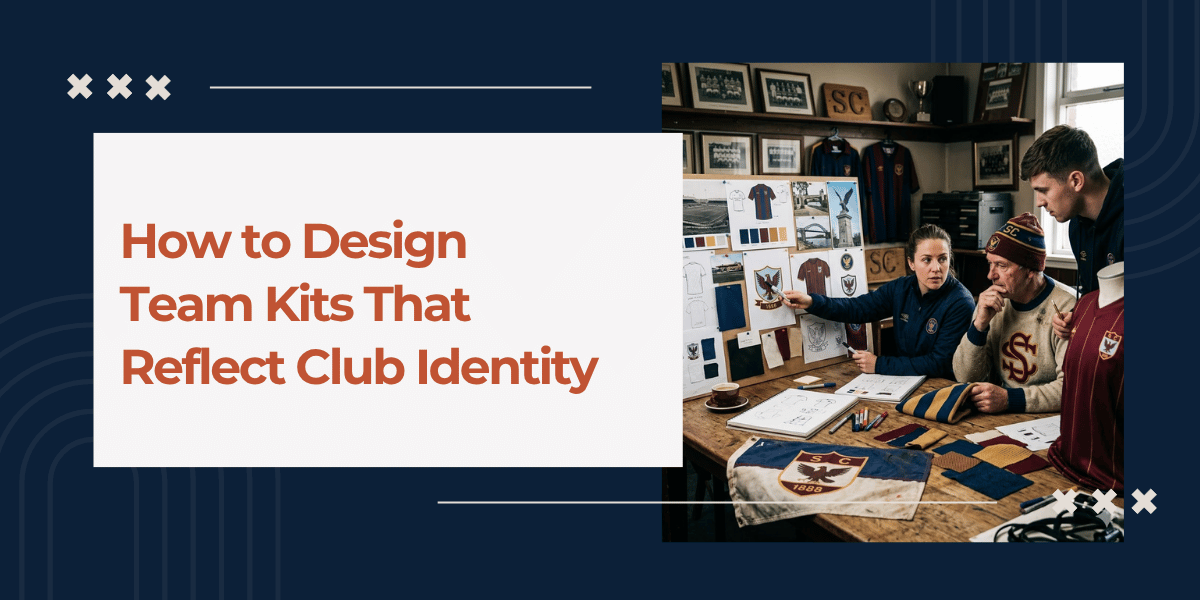
The team kit is often treated as an afterthought, but it plays a crucial role in shaping a club’s identity and how it is perceived by fans, players, and opponents.
Before you decide on a color or a collar style, ask yourself two questions: What does this club mean to its members? What do opponents feel when they see it on the field?
A school sports uniform is a different read than a street football club built on community hustle. An established corporate cricket team and a women’s rugby team pushing visibility in the sport have different visual priorities.
The kit must tell a truth – and that truth is in the club’s founding story, its values, and its community.
Write out the brief on the custom sports team kit design. Even just one paragraph. This is your picture.
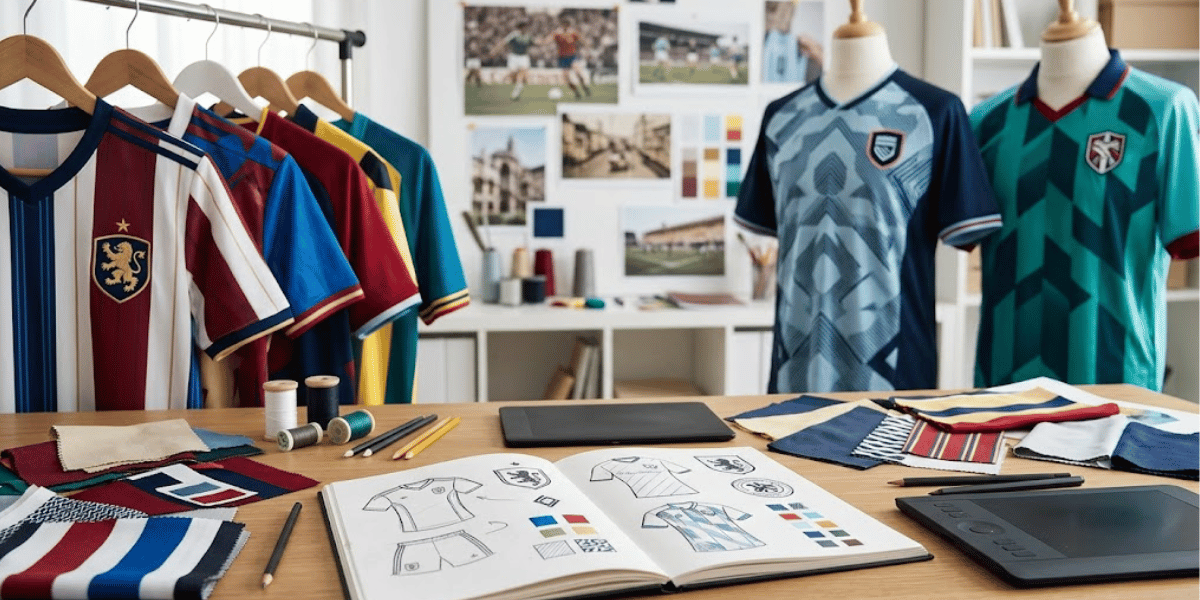
2. Color is Your Loudest Signal
Color does much of the work of club identity through team uniforms before anyone reads a badge or a name on a team uniform. It has to be:
Stand out from afar – on a pitch, in a crowd, from a phone camera.
Use contrasting colors for home and away kits to maintain clarity during play.
Hold up in a variety of lighting conditions (indoor courts, evening floodlights, midday sun).
3. The Badge: Placement, Size, and Proportion
Most clubs already have a crest. The design question is how to deal with it, not around it.
For traditional clubs, it is left-chest placement; for modern minimal designs, center-chest placement
Size should relate to the size of the fabric panel – a badge that is too small looks apologetic, too large looks amateur
The contrast between the badge background and the shirt colour is more important than most designers realize.
4. Fabric Choice Shapes Performance and Perception
Choosing the best fabric for sportswear is crucial, not just something you can put off. Nowadays, if you’re in the competitive sports scene, moisture-wicking materials are pretty much the baseline for gear.
We’re talking about polyester blends that effectively pull sweat away from your skin, keep weight down during the game, and dry out quickly between uses. But even within moisture-wicking sports clothes, some details really make a difference:
The weight (gsm) impacts how the kit moves and how well it holds up with prints.
Stretch is key for comfort, especially between contact sports and track events.
Texture plays a role in how well embroidery and sublimation printing look on the fabric.
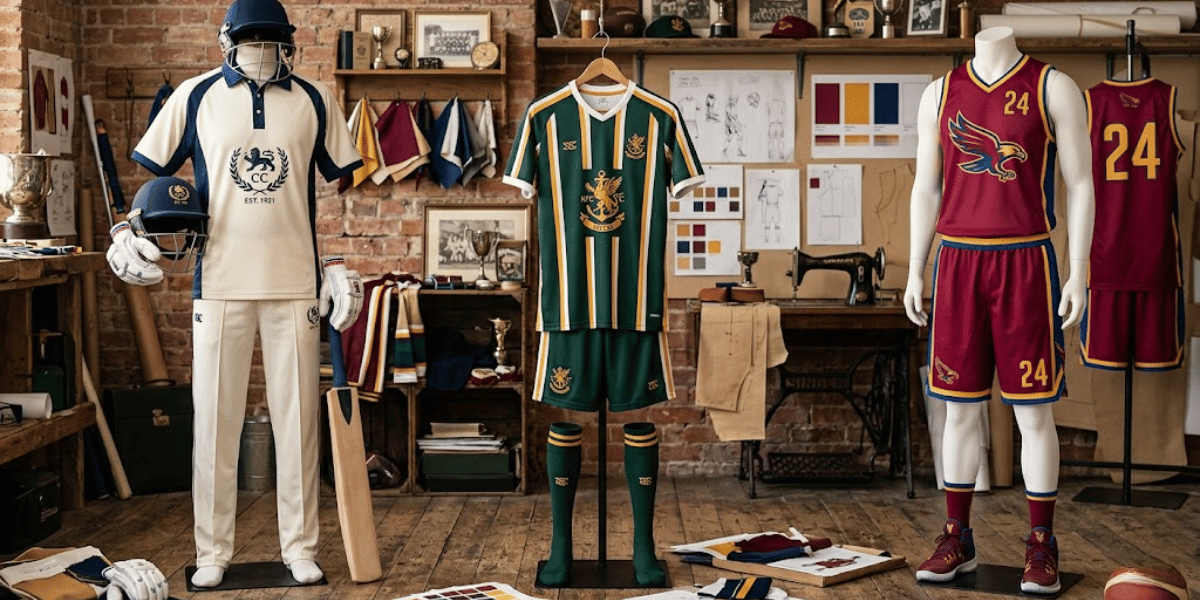
When it comes to sportswear, the best fabric really hinges on the sport itself. For a cycling kit, you’ll want something with four-way stretch and a decent amount of elastane. A football kit should be sturdier to handle those slide tackles. And for cricket, you definitely need UV protection and breathability since you’ll be out in the sun for long periods.
So, don’t let uniform suppliers in the UAE direct you toward the cheapest fabric out there. Picking the right material is an integral part of your design.
5. Typography and Numbering
When it comes to lettering on a kit, leaving it solely up to the printer is a missed opportunity. The font for squad numbers and player names should reflect the club’s identity, rather than just using whatever the printer’s software defaults to. It doesn’t make sense for a club with a traditional crest to have its players’ names in some plain sans-serif font that you’d see in a tech startup’s presentation.
Here are some ideas:
Go for serif or slab-serif fonts if your club has a classic vibe.
Use bold geometric sans for modern, performance-driven teams.
Consider custom lettering for high-end professional clubs.
Also, remember that there are standard practices for number placement by sport, such as where to put numbers on the back or front of the jersey. Stick to these when you buy customized uniforms in the UAE, unless you’ve got a solid reason to do otherwise.
What Players Actually Need
For custom team kits, it’s essential to involve the players who’ll be wearing them. Before you wrap things up, check in with them about a few things:
Is the collar comfy to wear with a bib?
Are the shorts equipped with pockets if the sport allows it?
How does the fabric hold up after a full 90 minutes?
How doesaCan they clearly see each other’s numbers from across the field? the fabric hold up after a full 90 minutes?
Getting quick feedback during a training session can help spot issues that could end up costing a lot to fix later on, after a big order is placed. When it comes to custom sports uniforms, they really shine when the players feel like they’re made for their movements, not just styled for a photo op.
Conclusion
Designing a team kit that reflects club identity requires more than selecting colors and logos. Every element, from fabric and typography to player feedback and badge placement, should communicate the club’s values and personality.
Well-designed team sports uniforms help strengthen team spirit, improve recognition, and create a lasting impression on supporters.
Whether you need personalized teamwear for sports clubs or are looking for wholesale sports uniforms, working with an experienced manufacturer makes all the difference.
Silver Thread UAE specializes in creating high-quality, custom sports apparel that combines performance, comfort, and distinctive club branding for teams across the UAE.
FAQs
How can a team kit reflect a club’s identity and values?
A team kit reflects a club’s identity through its colors, crest, typography, and overall design. These elements showcase the club’s history, values, culture, and community presence.
What elements should be included in a custom sports team kit design?
A custom team kit should include club colors, logos, player names, numbers, and suitable fabric. Typography, fit, and performance features should also match the sport.
How do you choose the right colors and logos for a team kit?
Choose colors that represent the club and remain visible during matches. Logos should be clear, properly sized, and contrast well with the kit.