Whenever there is an emergency anywhere, the front-line teams are either security forces or medical staff. So, someone who has to fight while remaining at risk, or who is always on alert, needs to be dressed for functionality and ease. The trouble with their uniforms is the last thing they need with all the chaos around them.
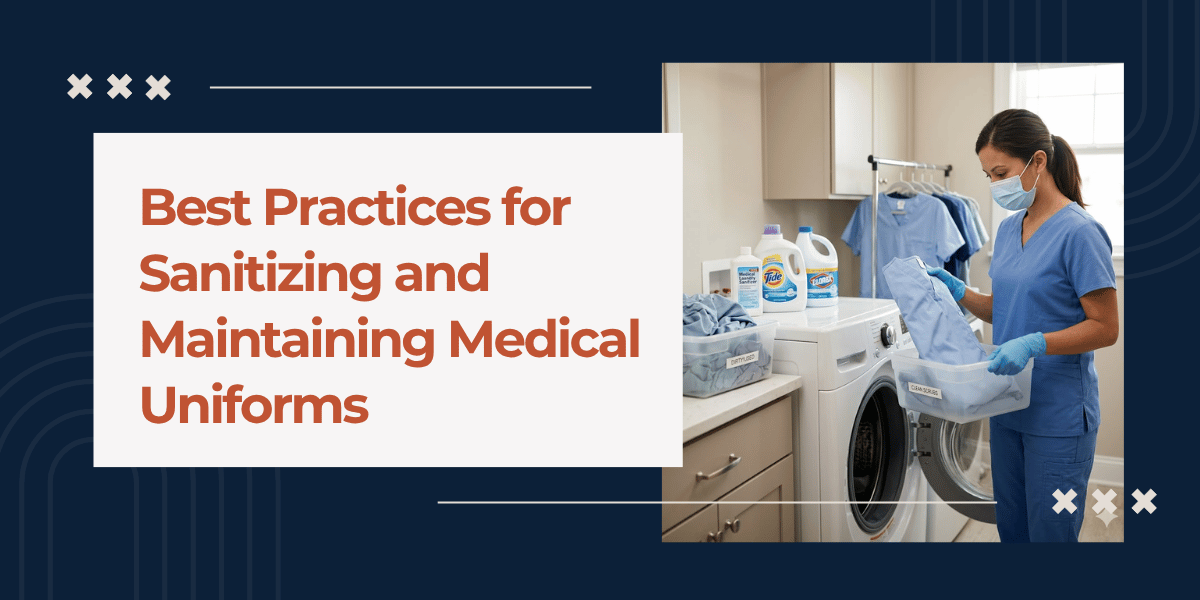
Today, we will share some best practices for sanitizing and maintaining medical uniforms to help healthcare professionals maintain hygiene, durability, and a professional appearance.
Now, the question is what brings perfection to the medical uniform while also keeping up with sanitization and maintenance? To help answer that, here is a practical guide to sanitizing and maintaining medical uniforms effectively.
Why Sanitization Matters More Than You Think
A single shift can contaminate modern nurse uniforms with MRSA, C. difficile, and other hospital-acquired organisms. The issue is not just what medical scrub fabrics absorb, but also what they release when washed improperly. Inadequate decontamination can occur due to low-temperature washing, delaying laundry, and sharing domestic machines.
Hospital infection control procedures increasingly consider medical uniforms a component of the clinical environment rather than mere personal clothing. That shift in thinking changes the way you tackle each step in the process.
So, what to do? See the best practices for sanitizing medical uniforms.
Things You Must Do for Sanitizing and Maintaining Medical Uniforms
So, how to sanitize medical uniforms properly?
Yes, you can pick the best fabric for modern healthcare uniforms and work with top-of-the-line uniform manufacturers, but not sanitizing properly can still lead to problems with infections, uniform maybe carrying. So, here is what you must do:
1. Before You Wash: What to Do Right After a Shift
It is the minutes between leaving the ward and getting home that count. Infection control experts recommend the following:
If you can, change out of your uniform before you leave the facility – many hospitals now have changing areas for this very reason
Store uniforms in a zippered bag immediately after use, away from personal clothing
Never place a used uniform on furniture, beds, or shared surfaces at home Handle used uniform and wash hands
Handle used uniform and wash hands
When purchasing hospital uniform scrubs or bulk hospital scrubs for UAE facilities, ask the supplier whether they provide laundry tips tailored to the fabric blend. Many uniform manufacturers in the UAE also provide care cards with washing instructions for clinical-grade uniforms.
2. Water Temperature and Detergent: Getting the Numbers Right
Now, what is the Best way to wash healthcare scrubs?
Make sure to run a full wash cycle instead of a quick one.
If your uniform is made from medical scrubs with built-in antimicrobial treatments, such as silver ions or copper-infused fibers, be aware that high temperatures may reduce the effectiveness of those treatments over time.
Most manufacturers will tell you how many washes their products can handle before the antimicrobial protection drops below clinical standards.
3. Drying and Storage
Using the dryer can help kill off more germs. When the fabric allows for it:
Toss your clothes in on high heat for at least 28 minutes.
If you’re air-drying, try to put them in direct sunlight, as UV rays can eliminate many germs.
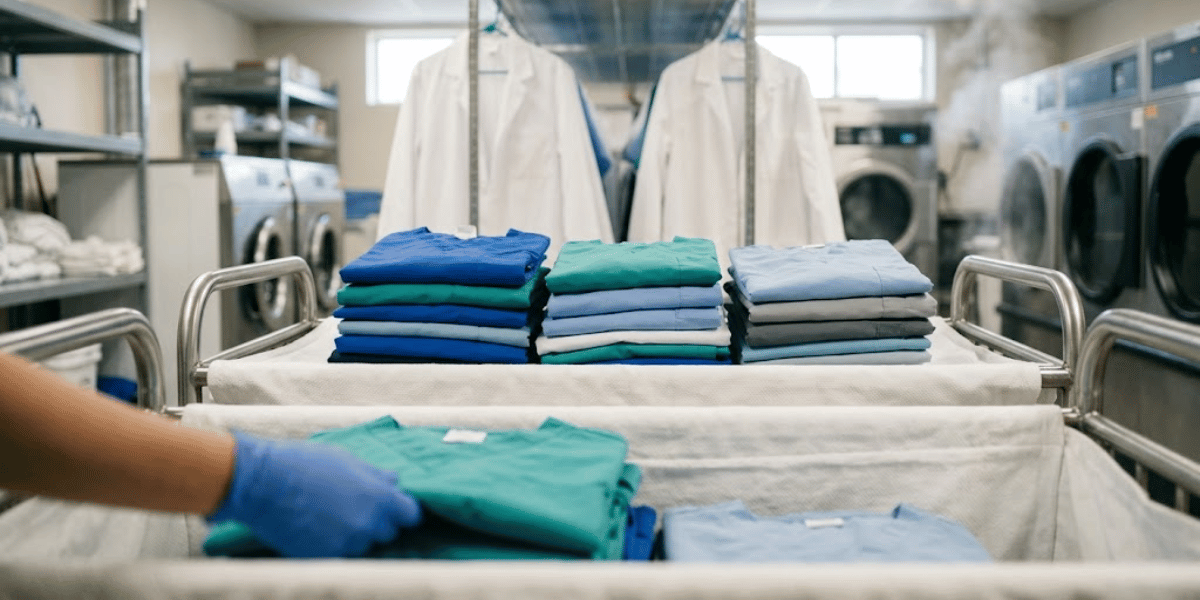
Keep your clean uniforms in a sealed bag or a designated closed area, away from outdoor clothes, shoes, and pet spots.
Just a heads-up: don’t iron over any stains you haven’t completely cleaned up. Heat can set stains, especially those from proteins like blood, making them impossible to remove and possibly leaving residue in the fabric.
4. Stain Removal Without Damaging the Fabric
When dealing with blood and other bodily fluid stains, start with cold water. Hot water can make proteins stick more tightly to the fabric. So, rinse the stained area with cold water right away. After that, you should:
Use an enzymatic pre-treatment and let it sit for about 10-15 minutes.
Wash it at the highest temperature that the care label suggests.
Before you dry it, double-check that the stain is still there. If it is, re-treat it before you apply any heat.
Bleach can help with some stains and kill germs, but be careful, as it can break down many of the synthetic materials used in today’s healthcare uniforms. Always read the label, and if bleach is safe to use, do it sparingly and rinse it out well.
Facility-Level Practices Worth Advocating For
Other than Medical uniform hygiene and maintenance tips, you need to know when to replace your medical uniform:
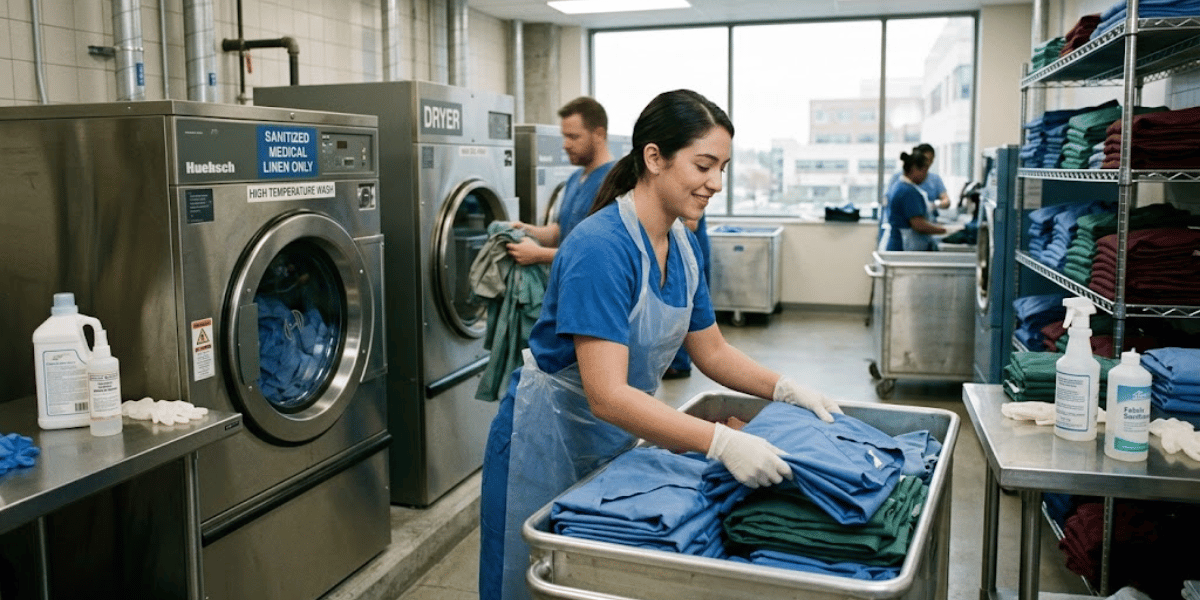
Consider hiring a commercial healthcare laundry service for bulk scrubs, especially in the UAE, where home washing may be unreliable.
Set up a clear uniform rotation policy, decide how many sets each staff member gets, how often they should be replaced, and who will cover the costs.
Make sure to include training on infection control for hospital clothing during onboarding, rather than treating it as an afterthought.
Conclusion
Proper sanitization and maintenance are just as important as selecting high-quality medical apparel. While traditional medical uniforms focused primarily on appearance and identification, modern healthcare clothing must support infection control, comfort, and durability. Following proper washing, drying, storage, and stain removal practices helps extend garment life while reducing contamination risks.
When sourcing uniforms, it is essential to work with reliable uniform suppliers in the UAE that provide quality products and care guidance. Whether you need standard scrubs or want to buy customized uniforms in the UAE, companies like Silver Thread UAE offer professional solutions designed for healthcare environments.
FAQs
How often should medical uniforms be washed?
Medical uniforms should be washed after every shift to maintain proper hygiene. Regular laundering helps reduce the risk of contamination and cross-infection.
What is the best temperature for washing healthcare uniforms?
Healthcare uniforms should generally be washed at 60°C or higher when the fabric permits. Higher temperatures help eliminate harmful bacteria and other contaminants effectively.
When should healthcare professionals replace their medical uniforms?
Medical uniforms should be replaced when they become damaged, faded, or difficult to sanitize properly. Worn-out garments may compromise hygiene, comfort, and professional appearance.