When you are on the ground busy scoring, the last thing you need is a distraction from sweat dripping from your body. So, in simple terms, you need moisture-wicking fabrics for any sportswear.
Previously, we explored custom sportswear printing methods and looked at how different printing techniques can help clubs create distinctive teamwear. Today, we’re focusing on another factor that matters just as much on the field: choosing the right fabric.
The moisture-wicking fabrics for sportswear stay in shape and remain durable even after 20 wash cycles, especially in the hard water of the UAE. Now, when clubs order in bulk, they need to consider it an ongoing decision.
Need a little more convincing on why moisture-wicking fabrics are good for sportswear? Let us help you with this article.
How Moisture-Wicking Fabrics for Sportswear Actually Work
This is capillary action, not absorption. So, what fabric is best for sportswear in hot weather according to reputable uniform suppliers in the UAE?
To answer this, you must know that:
Cotton absorbs sweat and holds it, which is why it stays heavy and wet.
Synthetic fibers include polyester and polyester-spandex blends. They are used to make moisture-wicking athletic apparel and have a different fiber structure.
Microscopic channels in the yarn wick moisture along the fabric surface to the outer layer, where the increased surface area speeds evaporation.
This seems like an answer, but this only works if the fiber is not hygroscopic itself. Polyester has low moisture regain (~0.4%) vs cotton (~7-8%). This single number shows a major difference in the performance of the two materials.
Some of the technical details make moisture-wicking fabric stand out:
Yarn Cross-section: Channel-shaped or multi-lobal fibers transport moisture faster than round fibers.
Knit Structure: Pique and mesh knits have air gaps to help evaporation; tight jersey knits trap heat.
Finishing Treatment: Hydrophilic finishes applied during manufacturing pull moisture to the surface; without this finish, even the right fiber underperforms.
Fabric Weight (GSM): Lighter GSM (130-160) suits UAE outdoor training. It is better than other heavy sports fabrics for a climate like the UAE.
Ultimately, the best sportswear fabrics for UAE heat depend on how the fabric blends are used to wick moisture while keeping your body cool in summer.
What Are the Best Moisture-Wicking Fabrics for Sportswear?
Not all moisture-wicking fabrics perform the same way, especially in the heat and humidity of the UAE. For sportswear, the best choice depends on how quickly the fabric moves sweat away from the skin, how well it allows air to circulate, and how quickly it dries.
1. Polyster
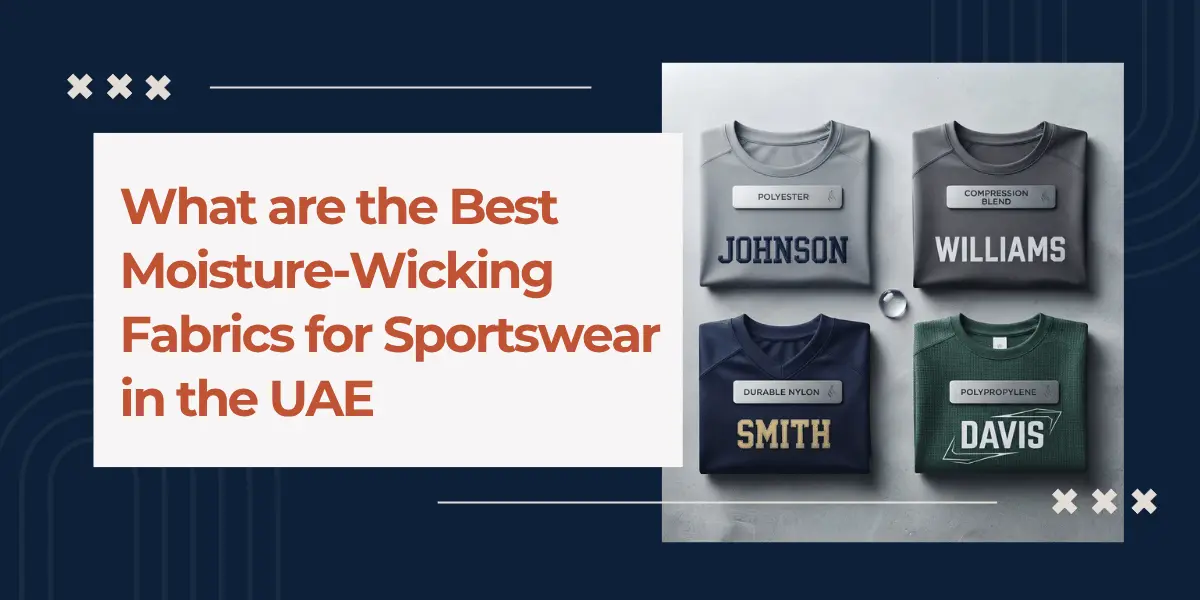
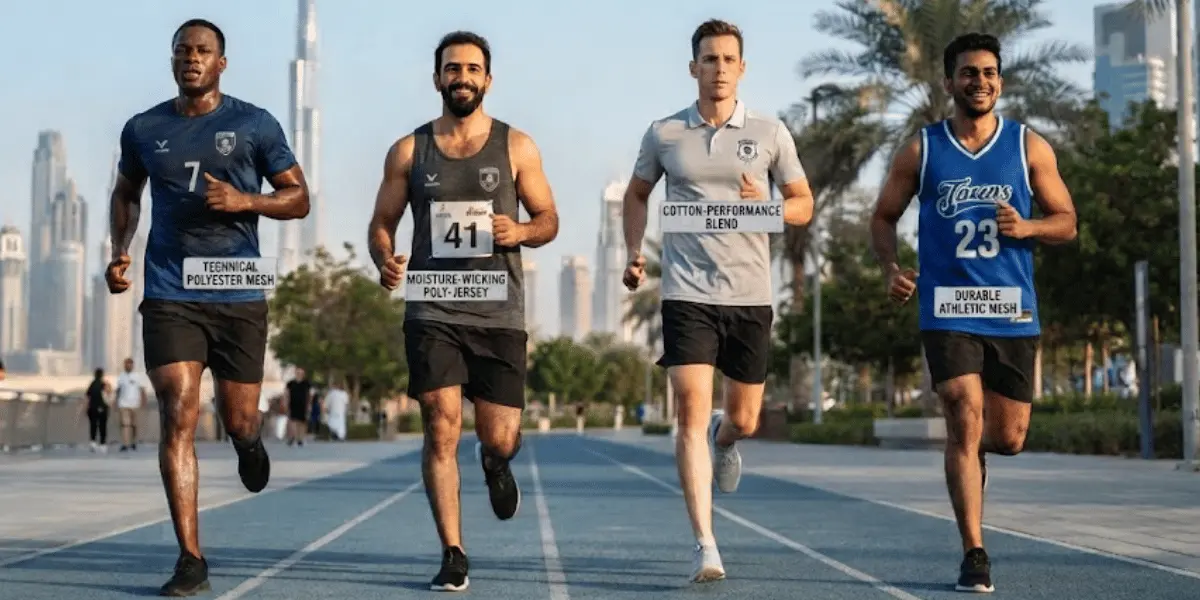
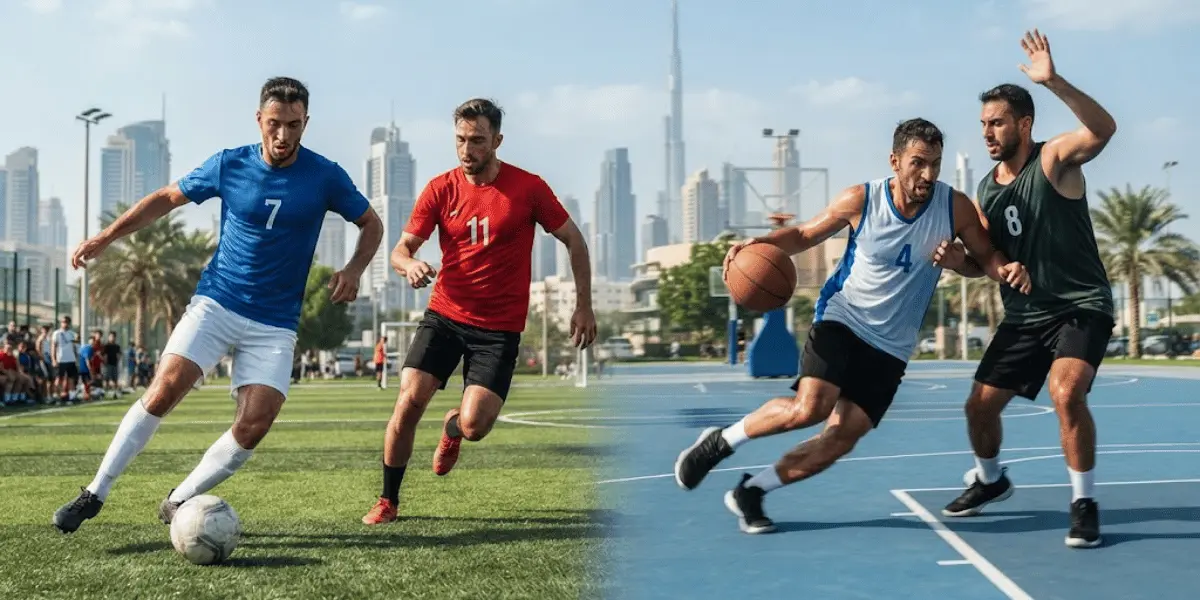
Polyester is one of the most widely used fabrics and is considered the best fabric for sportswear. Its low moisture absorption allows sweat to move across the fabric surface and evaporate quickly. These properties make it a practical choice for football jerseys, training kits, running wear, and other outdoor sportswear.
2. Polyester-spandex
Polyester-spandex blends are another strong option, particularly when athletes need greater flexibility and a close, comfortable fit. Polyester manages moisture, while spandex adds stretch and helps the garment retain its shape during movement.
3. Nylon
Nylon is also used in performance sportswear because it is lightweight, durable, and moves moisture away from the skin. It’s a good option for activewear that needs to withstand frequent use and washing.
4. Bamboo Blends
Bamboo blends are soft, breathable, and comfortable against the skin, with good moisture-management properties when combined with performance fibers. Their effectiveness can vary depending on the blend ratio and fabric construction, making them more suitable for lifestyle and light-performance sportswear.
5. Polyester-Cotton Blends
Polyester-cotton blends combine the softness and comfort of cotton with some of polyester’s moisture-management benefits. However, they generally wick and dry less efficiently than purpose-built synthetic performance fabrics, making them better suited to lower-intensity activities and everyday teamwear.
What Makes a Strong Moisture-wicking Sportswear Fabric
Know that just because a label says “dry fit” or “performance” doesn’t mean it works the same. What matters on the field is:
Fiber blend ratio (100% polyester wicks faster than cotton blends, but a little spandex improves fit and doesn't hurt wicking)
Mesh panels under the arms and down the spine, where sweat output is at its highest
UV resistance, as low-quality dyes would fade in a season under UAE sun exposure
Important in humid climates where bacteria grows faster on damp fabric. Antimicrobial treatment.
Why UAE heat and humidity change the fabric equation
Coastal cities such as Dubai and Abu Dhabi experience a unique blend of high temperatures and high humidity, especially during the summer months. One aspect that many sportswear shoppers often overlook is humidity.
When the air is already saturated with moisture, the process of evaporation, the key to cooling, slows down significantly.
This means that the ideal sportswear fabrics for the sweltering heat of the UAE must do more than just wick sweat away from the skin. They need to be designed to enhance airflow, allowing evaporation to occur even when humidity is high and working against it. That’s why there isn’t a one-answer for which fabric is best for sportswear in hot weather.
A fabric that excels in dry heat, like the arid inland desert regions with lower humidity, might still trap moisture in the humid coastal climate of the UAE, simply because the air struggles to absorb sweat vapor effectively.
Therefore, clubs looking to source sports uniform kits wholesale for the UAE need to prioritize fabrics specifically tested for humid heat, not just heat alone.
Team Identity and Uniform Decisions
For a club, fabric performance and visual identity are two sides of the same coin. The best color combinations for sports uniforms often hinge on contrast and visibility on the field, but don’t forget that color choice also affects heat absorption.
In the sweltering outdoor conditions of the UAE, darker shades can soak up more solar heat, even with top-notch wicking fabric underneath. If you want club identity through custom sports and team uniforms, it’s essential to view fabric and color as a unified decision:
Opting for lighter base colors can help minimize heat absorption during those hot summer training sessions.
High-contrast trim enhances visibility without the need for dark, heat-retaining panels.
Maintaining a consistent fabric weight and cut across all sizes is crucial for personalized teamwear for sports clubs. Inconsistent stock can compromise both comfort and appearance for the entire squad.
Conclusion
Choosing the right moisture-wicking fabrics for sportswear can make a significant difference to comfort, performance, and durability in the UAE. Lightweight polyester, polyester-spandex, and other breathable blends can help create effective moisture-wicking sports clothes for demanding training and competition.
With the right fabric and thoughtful uniform design, athletes can stay comfortable while teams maintain a professional identity.
FAQs
Why are moisture-wicking fabrics good for sportswear?
Moisture-wicking fabrics move sweat away from the skin and help it evaporate faster. This keeps athletes drier, more comfortable, and focused during training and competition.
What is the best fabric for sportswear in the UAE?
Lightweight polyester and polyester-spandex blends are popular choices for UAE sportswear. They offer moisture management, breathability, quick drying, and durability for outdoor activities.
What should clubs consider when choosing sports uniform fabrics?
Clubs should consider moisture-wicking performance, fabric weight, breathability, durability, UV resistance, and stretch. The fabric should also suit the UAE’s heat and humidity.