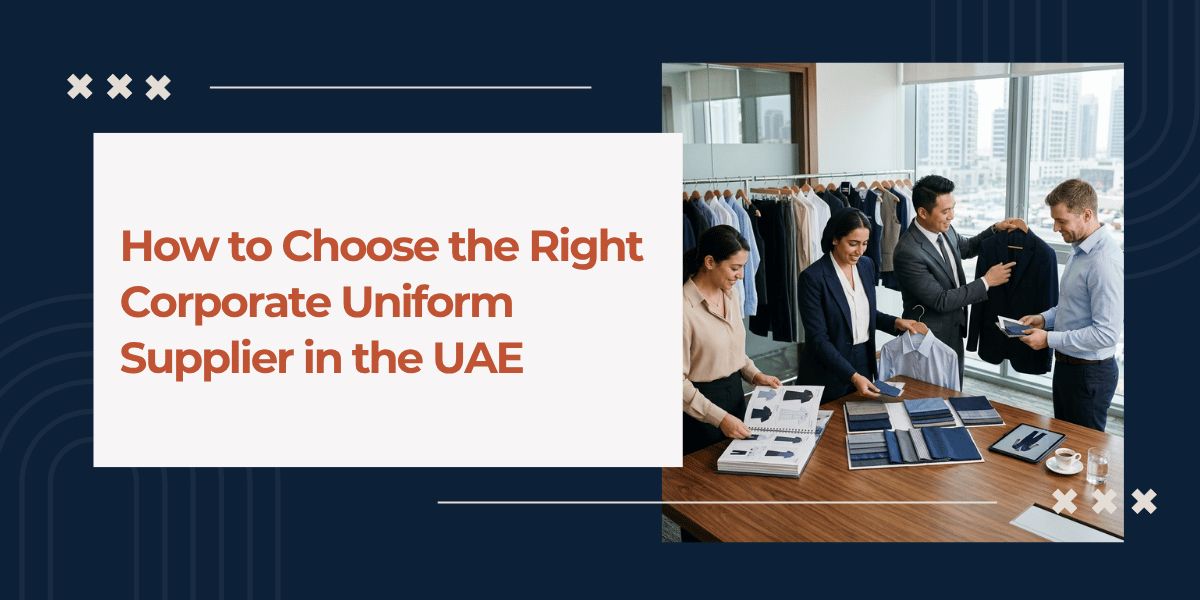
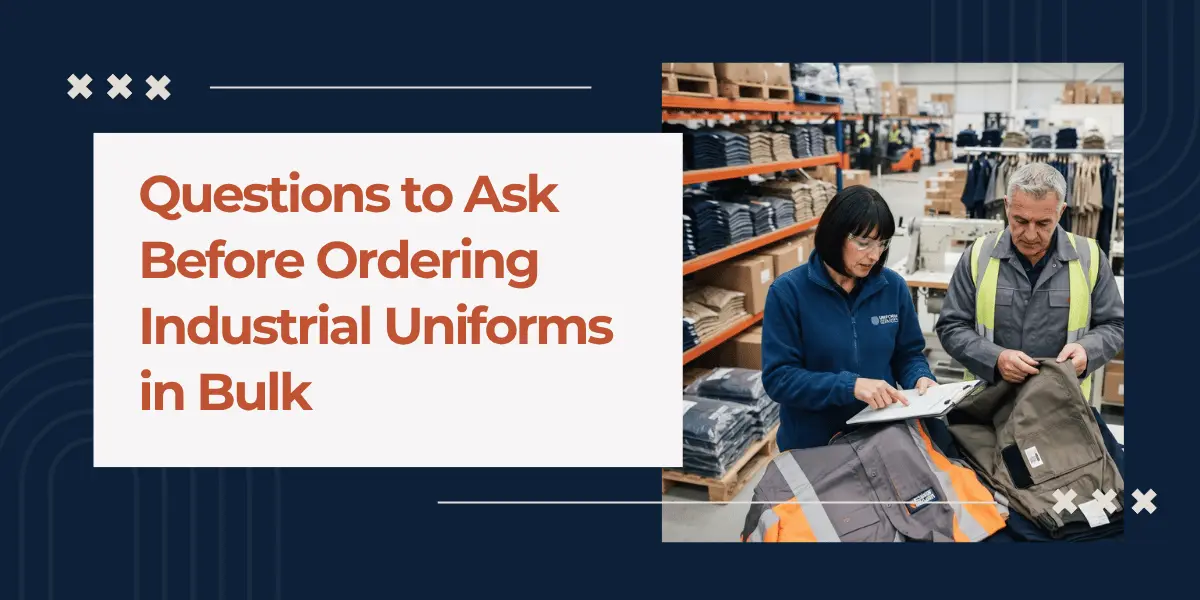
Uniform sampling is the process of turning a paper design into a wearable, washable garment. Skip it or rush it, and you’ll wind up with 300 shirts that shrink a size after the first wash cycle. If you are unsure what to request, what to test, and how to sign off before production begins, this is your article.
How Does the Uniform Sampling Process Work Before Bulk Production?
You send over a brief outlining roles, quantities, colours, logo files, and a budget.
The supplier sends a quote and fabric swatches.
A prototype is created in a chosen size. This is usually at a cost, which some suppliers will deduct from the order.
You request changes and the supplier creates a fixed sample.
Approve a final sample and go into production.
Timelines vary by supplier and complexity, so ask for dates in writing. Plan for several rounds of changes, not just one.
What Should Businesses Check Before Approving Uniform Samples?
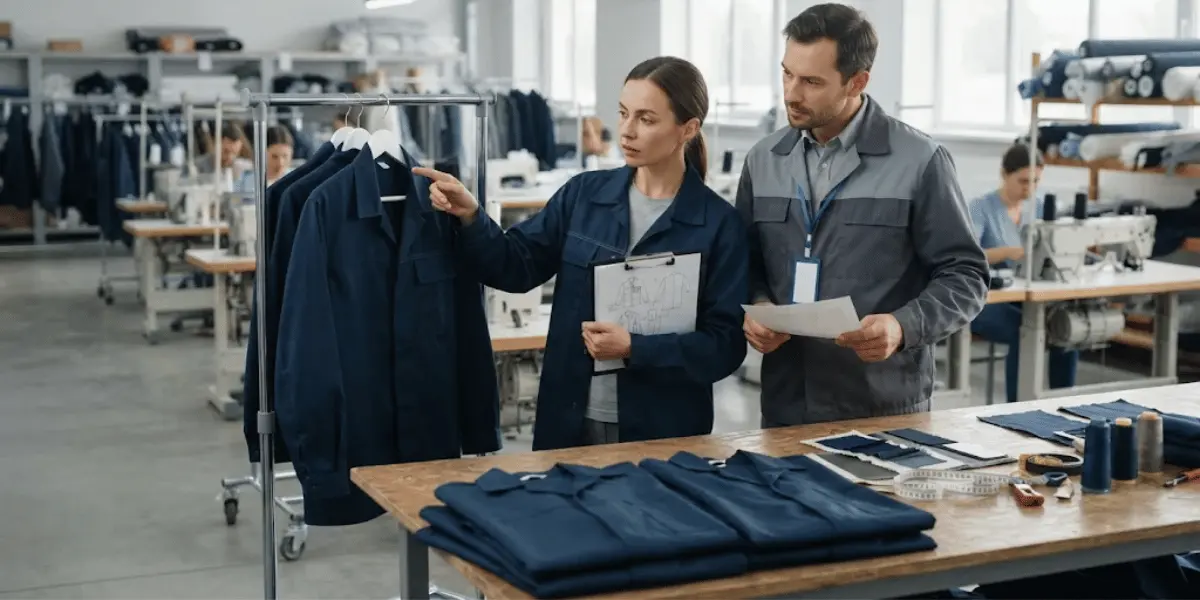
For the uniform sample approval process, look at the garment, but also try it on. A sample that looks good hung up can fail on a human in July or December.
Fabric Weight and Composition: Compare the blend and GSM (grams per square meter) to what was quoted. If the supplier has a mill specification, ask for this.
Shrinking: Wash the sample several times at the temperature your staff or laundry will actually use, then remeasure.
Colour Fastness: After washing, check for no fading or colour bleed. Reputable suppliers can supply test results under ISO 105 standards.
Abrasion and Pilling: The first part of the fabric that deteriorates is the elbows and cuffs.
Sewing: Always look for reinforced seams, especially at stress points like the shoulders, pockets, and crotch.
Fit: Wear the sample and have actual employees, not just the office manager, move around in it by reaching, bending, sitting, and lifting.
Comfort in the Heat: The UAE sometimes has summertime temperatures above 45°C, so a hefty polyester blend that works well in London would be terrible here.
So, check the sample where you can actually see your design in action.
Embroidery is a good option for polos, caps, and jackets, especially if you want your logos on them. It is durable but also adds weight and can pucker lighter fabrics.
Screen printing works well for larger runs of simple designs in solid colours.
Heat transfer is best for smaller runs or adding single names.
Sublimation is limited to polyester or high-polyester fabrics, and gives the best results on light colours.
Approve the logo on the actual fabric, at its final size and position, not just on a mock-up.
The right branding method ensures your uniforms maintain a professional appearance while keeping your company logo clear, consistent, and durable through regular washing and wear.
Match the Garment to the Job
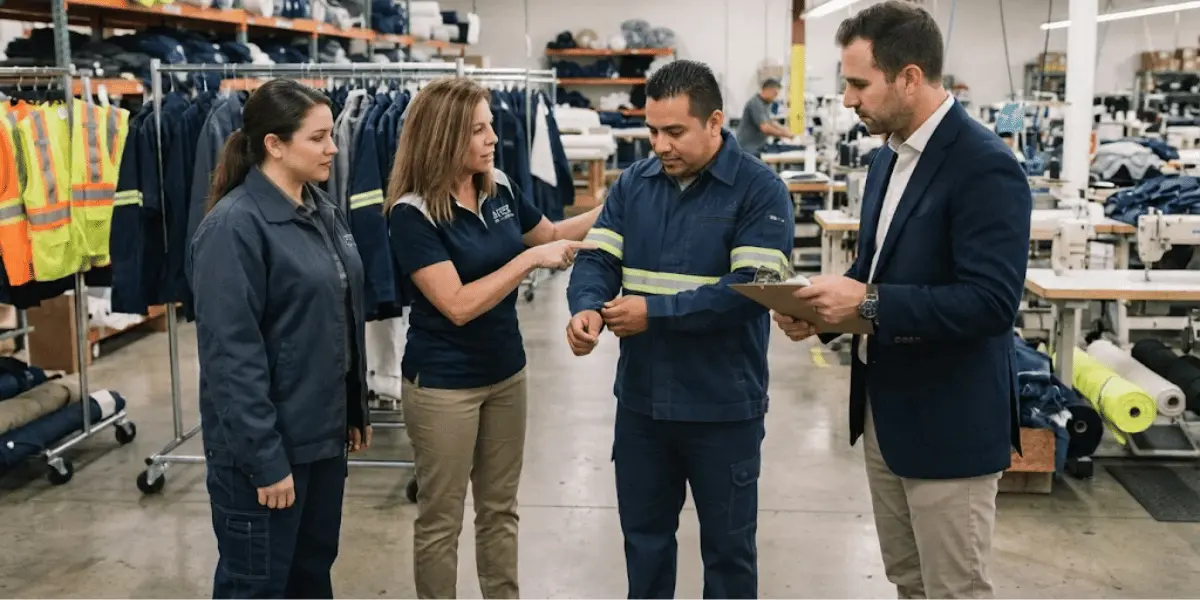
Role-based uniforms are more practical than using the same design for everyone. A receptionist and a warehouse operator have very different needs, and role-specific workwear can meet them while keeping the brand consistent.
Healthcare uniforms need fabric that withstands being hot washed. Therefore, many facilities use colour coding to differentiate roles.
Hospitality uniforms need to resist stains. They should allow easy movement while still looking neat at the end of the shift. Kitchen and front-of-house teams often need different fabrics.
Industrial uniforms may need to meet specific safety requirements. This could include high-visibility garments and fire-resistant clothing.
Automotive uniforms need to be best for grease and oil, so choose durable fabric and strong stitching. Test how well stains come out on a sample first.
Why the Cheapest Quote Can Cost More
The hidden costs of cheap uniforms for businesses often go beyond the initial purchase price. Cheap uniforms often come with costs you won’t see on the invoice. Thin fabric doesn’t last, so you end up reordering sooner. Poor stitching means more repairs and replacements, while uncomfortable garments may stay in the closet or look untidy when worn. And when dye lots vary, your team can end up in several shades of navy.
Look at the cost per year of wear, not just the price tag.
Choose the Reliable Supplier Before You Request the Sample
A trading company that outsources all its work gives you less visibility than a factory you can visit. A corporate uniform manufacturer that handles cutting, sewing, and decoration in-house can usually respond more quickly when you request changes. Ask each supplier to explain its sampling process, including how many revisions are covered and what additional changes will cost.
Ask for references from businesses in your sector, and request production photos or a factory visit.
Whether you’re comparing a UAE uniform manufacturer with an importer or looking at suppliers for the first time, find out who actually makes the garments.
If you’re planning to buy customized uniforms in the UAE, check the minimum order quantity and ask whether the supplier will keep your pattern and artwork on file. This makes.
Corporate uniform reordering much easier: they can reuse your specification sheet and size run instead of starting from scratch each time.
Consistency is just as important when uniforms are meant to support your marketing. Customers notice an off-center logo, colours that vary from one location to another, or staff wearing clothes that look worn. A thorough sample approval process helps ensure every batch reflects the same company.
Conclusion
Uniform sampling and approval are essential steps in ensuring consistent quality before large-scale production. From checking fabric composition and shrinkage to testing stitching, fit, and branding, every detail matters when ordering uniforms in bulk.
Choosing a reliable uniform manufacturer in the UAE can make this process smoother and help avoid costly production mistakes. Silver Thread UAE supports businesses with customized uniform manufacturing solutions designed around their branding, workforce requirements, and industry needs.
By prioritizing proper sampling and final approvals, businesses can ensure their uniforms look professional, feel comfortable, and maintain consistent quality across every production batch.
FAQs
Why is uniform sampling important before bulk production?
Uniform sampling allows businesses to check fabric quality, fit, stitching, and branding before approving large orders. It helps identify potential issues and avoid costly production mistakes.
How many samples should be approved before uniform production begins?
Businesses should approve at least one or two final samples that meet their requirements. For multiple roles or garment styles, separate samples may be necessary to confirm fit and specifications.
What should businesses look for in a uniform manufacturer in the UAE?
Look for a manufacturer with consistent quality, reliable production capabilities, and customization options. Check fabric sourcing, sampling procedures, production timelines, and previous client experience.