Healthcare uniforms aren’t basic necessities or random attire for nurses or doctors. This uniform is highly regarded in the medical profession. It is believed to offer the utmost comfort, functionality, and advanced technology for moisture-wicking and antibacterial properties.
Previously, we discussed the psychology of color in healthcare uniforms and examined the key differences between medical scrubs and lab coats, focusing on how design and functionality impact healthcare professionals. Today, we shift our attention to a broader perspective—the evolution of healthcare uniforms over time.
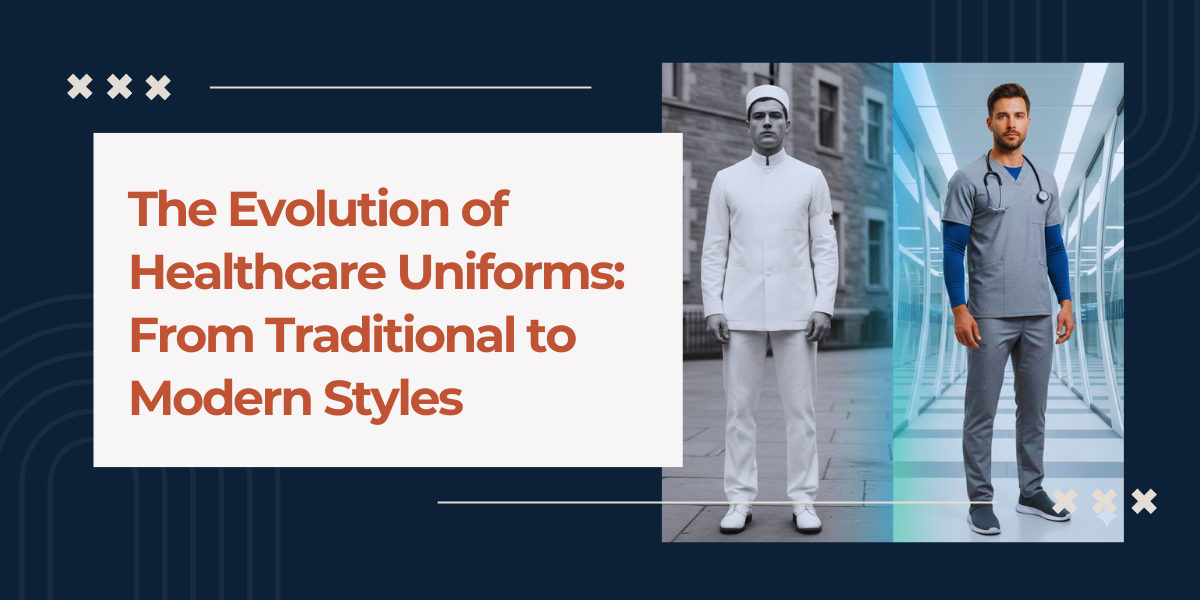
So, how did the healthcare uniforms change with the passage of time? The evolution of healthcare uniforms happened gradually over time.
The transformation didn’t just follow the fashion healthcare workwear trends, but also cater to the needs of modern medicine.
So, how do traditional medical uniforms turn into modern styles? Let’s take a look at a bit of the history and modern choices.
Early Beginnings - How It Started?
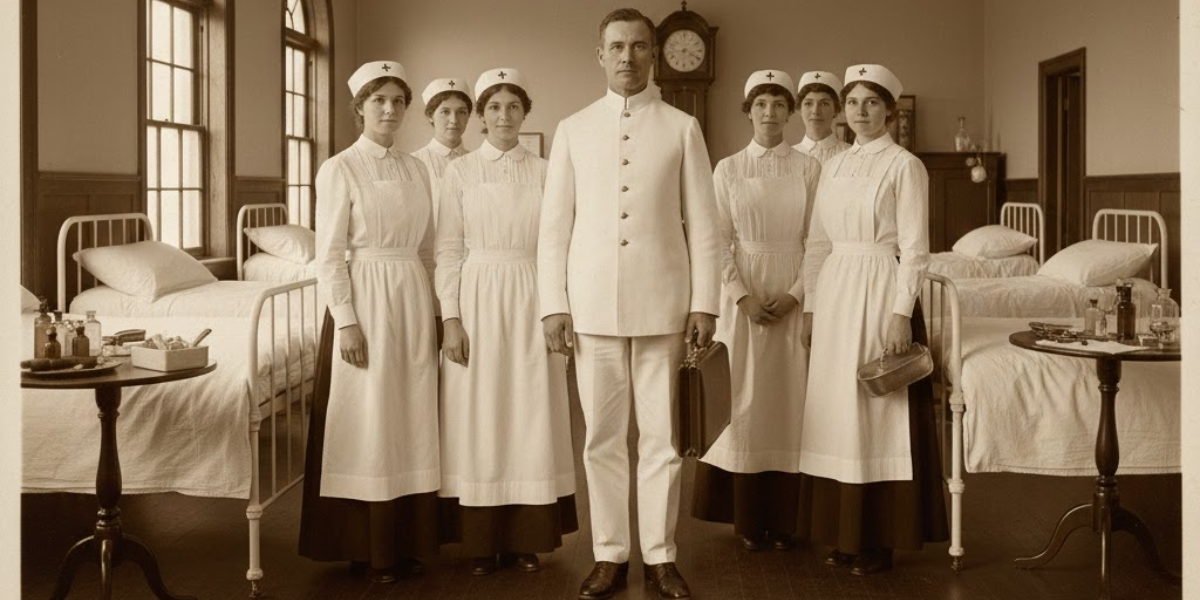
In the 19th and early 20th centuries, uniforms were more about societal expectations than the practical needs of staff. So, it remained more on the traditional way rather than fulfilling the functional demands of the healthcare industry.
Main Features of Early:
Nurses were given more starched white dresses with aprons and caps.
White was known for purity, discipline, and cleanliness.
Doctors had more formal suits with long white lab coats.
Uniforms showed more authority but offered restricted movement.
These uniforms aligned with the culture of those times. It was more about professionalism, modesty, and order. However, it provided limited comfort and limited function.
Mid-Century Shift - Introduction of Scubs
In the mid-century, scientists placed greater emphasis on the germ theory, and therefore uniform manufacturers in the UAE began focusing on different uniform functions. As white made stains more visible, experts introduced the coloured scrubs.
Why do scrubs come into being?
Using colored scrubs helped lessen visual stress in the OR.
Green and blue are great colors for standing out in surgical settings.
Plain designs made them easy to wash and less likely to hold onto germs.
Scrubs also allowed for better movement, comfort, and a standardized look.
This was the most reassuring moment for uniforms in healthcare, as it combined science and technology. However, there was still a long way to go to the practicality in uniforms, which brings us to the modern choices in healthcare uniforms.
What Modern Uniform Materials Bring?
Mainly, performance. Modern nurse uniforms offer greater comfort, improved functionality, and, most importantly, are manufactured with the UAE’s weather conditions in mind.
1. New Tech-based Fabrics
Now, in the late 20th century, healthcare trends took a different turn. We see hospitals are always busy. Besides, while trying to provide 24/7 healthcare services, doctors and nurses had to give long shifts. Therefore, hospital uniform manufacturers had to focus on uniforms that provide comfort for teams on long shifts and who are always on the move.
New uniforms started to include things like:
Fabrics that fight off bacteria to help lower infection risks
Materials that wick away moisture and let your skin breathe
Stretchy fibers that make it easier to move around
Color-coded systems to help identify staff quickly
All these updates turned hospital uniform scrubs from just basic clothing into vital tools in the medical field.
2. Inclusivity and Identity in Modern Healthcare Uniforms
Following the functionality, another need for medical uniforms came for inclusivity. As the world gets global and more ethnicities and different demographics enter the scene, it is now more important to include different sizes and keep customization in mind.
Some key design priorities these days are:
Tailored cuts that work for every body type
Choices that strike a balance between professionalism and personal style
Designs aimed at enhancing patient comfort and making communication easier
This emphasis on inclusivity reflects a wider cultural shift toward empathy and patient-centered care.
3. Post-Pandemic Changes: PPE and Beyond
The COVID-19 pandemic really sped up changes in healthcare clothing, particularly focusing on protection and comfort.
Here are some key improvements we’ve seen:
Lightweight but strong multi-layer PPE
Improved gown designs that help minimize contamination
Reusable gear designed with safety in mind
Increased attention to the comfort and fatigue of frontline workers
All these shifts have reshaped what we expect from healthcare uniforms today.
What to Expect from the Future of Healthcare Uniforms?
Technology is really starting to blend into our everyday lives. We’re looking at a future where we might see:
Fabrics that can track health metrics
Clothing that adjusts to different weather conditions
As the evolution of healthcare uniforms continues to accelerate, the focus is on designing workwear that not only supports medical staff in performing their duties efficiently but also contributes to improved patient care. This progress is being closely followed and adopted by leading uniform suppliers in the UAE, who are aligning innovation with regional healthcare standards.
This ongoing transformation blends science, safety, and a sense of identity, paving the way for uniforms as smart as the professionals who wear them.
Conclusion
The evolution of healthcare uniforms reflects a steady shift from tradition to performance, comfort, and innovation. What began as symbolic attire has transformed into functional healthcare workwear designed for safety, efficiency, and inclusivity.
Today’s uniforms support long shifts, infection control, and professional identity, especially in demanding climates. For healthcare facilities looking to buy customized uniforms in UAE or source bulk hospital scrubs in UAE, modern solutions now balance durability with advanced fabric technology.
Leading providers like Silver Thread UAE ensure high-quality, tailored uniforms that meet regional healthcare standards. As healthcare continues to evolve, uniforms remain a critical part of delivering quality care while supporting the professionals behind it.
FAQs
How have healthcare uniforms evolved over the years?
Healthcare uniforms have evolved from formal, restrictive clothing to functional workwear using advanced fabrics, improved designs, and technology that supports hygiene, comfort, mobility, and modern clinical requirements.
What are the latest trends in modern nurse uniforms?
Modern nurse uniforms focus on antimicrobial fabrics, moisture-wicking materials, stretchable designs, inclusive sizing, and color coding to enhance comfort, safety, identification, and overall workplace efficiency.
Why is modern healthcare workwear preferred over traditional uniforms?
Modern healthcare workwear offers better comfort, flexibility, infection control, and durability, making it more suitable for long shifts, fast-paced environments, and the practical demands of today’s healthcare professionals.