
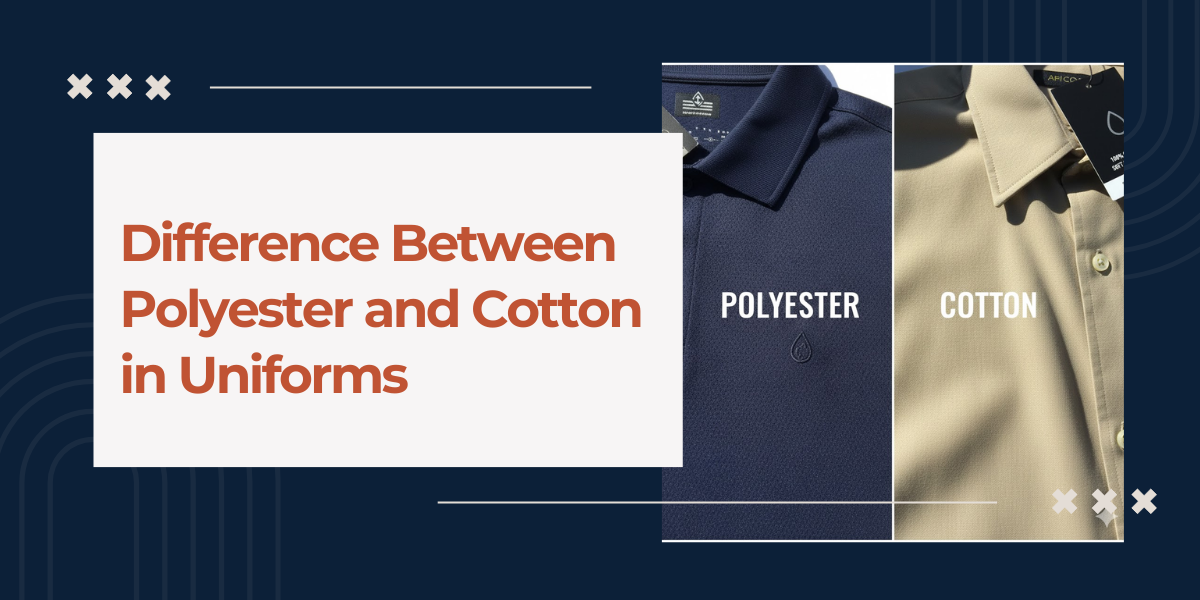
Difference Between Polyester and Cotton in Uniforms

Uniforms play a key role in daily life, from schools and sports teams to hospitality and service industries. The right fabric can make a huge difference in comfort, durability, and appearance.
You cannot take the fabric of uniforms lightly. It is as significant as your budgeting plan. Uniforms represent the identity of schools, sports teams, industrial workers, or hospitality staff, while also ensuring comfort and durability.
In all this, prioritising the right fabric is essential. The most in-demand fabrics for various uniforms are polyester and cotton, each offering unique benefits depending on the purpose and environment.
Both have their pros and cons, but which one suits your staff and business is the real deal. So, when it comes to choosing a resilient, long-lasting uniform, you need to learn which fabric will work best for your team. Many uniform suppliers in the UAE can help you select the right material to ensure comfort, durability, and a professional look.
Let us help you find the answer to which fabric is the best for work uniforms.
What is Cotton?
The cotton plant yields cotton, which is a naturally occurring fiber. It is well-known for its comfort, breathability, and softness. The comfortable T-shirt you enjoy lounging in is likely made of cotton.
This fabric is widely used for home textiles, such as sheets and towels, as well as clothing.
What is Polyester?
Polyester is a synthetic fiber derived from petrochemicals. Because it is strong and wrinkle-resistant, it is a popular option for a variety of apparel and home goods.
Have you ever worn a polyester shirt that seems like it was just taken out of the dryer? That’s polyester’s magic!
Difference Between Polyester and Cotton in Uniforms
Cotton is more comfortable and breathable, but polyester is more resilient and moisture-resistant. The environment, degree of use, and uniform branding requirements all influence the ideal fabric.
Cotton Uniforms Benefits
Cotton has several perks, such as:
- It’s breathable.
- It absorbs moisture well.
- It’s hypoallergenic.
- Dyeing it is a breeze.
- It’s soft and comfy.
Plus, it’s one of the more affordable materials out there, especially considering the current prices. For these reasons, cotton is often considered the best fabric for work uniforms.
Organic cotton stands out due to its eco-friendly nature. It’s grown without chemicals, insecticides, or pesticides, making it a solid choice for those with sensitive skin.
Given all these benefits, cotton’s a no-brainer for uniforms that need something long-lasting, breathable, eco-friendly, and easy to customize.

Polyester Uniforms Advantages
Polyester offers several advantages.
- Wrinkle-resistant
- Doesn’t fade easily
- Super durable.
- Stain-resistant
- Strong enough to maintain its shape without stretching out.
Another perk is that polyester doesn’t really hold onto odors since it doesn’t absorb sweat, making it work best as sports and housekeeping uniforms. Instead, it lets the moisture (and any smells) evaporate thanks to its moisture-wicking properties.
This fabric is pretty tough, too; you can toss it in pretty much any wash cycle, and it’ll still look fresh and ready to wear. And when it comes to drying, it does so really quickly and holds dye well without losing color.

Polyester vs Cotton Uniforms
Picking the right fabric for corporate uniforms isn’t a one-size-fits-all situation. It really depends on how you plan to use the material and how durable you need it to be. The advantages and disadvantages of cotton versus polyester will ultimately depend on what’s most suitable for you.
For example, if you’re going to be working outside in the summer heat, a moisture-wicking polyester fabric—often considered the best fabric for sportswear—might be your best bet. On the other hand, if you want to customize your company’s uniforms for a specific look, a flexible cotton fabric could be the way to go.
Both cotton and polyester have their unique pros and cons, and in the end, it boils down to what you need in a material to ensure comfort and style. Check out the table below for a straightforward comparison of the strengths and weaknesses of polyester and cotton, which will help you figure out what’ll work best for your clothing or uniform needs.
| Fabric | Pros | Cons |
| Cotton | – Soft and breathable
– Comfortable for long hours – Hypoallergenic and gentle on skin – Natural and biodegradable |
– Absorbs moisture and becomes heavy
– Takes longer to dry – Prone to shrinkage and fading – Requires more ironing and care |
| Polyester | – Highly durable and long-lasting
– Moisture -wicking and quick-drying – Resists wrinkles, shrinking, and fading – Cost-effective with low maintenance |
– Less breathable in hot environments
– Can cause discomfort for sensitive skin – Not biodegradable – May trap heat depending on fabric weight |
Both fabrics have their benefits, but the best option really depends on the job. For instance, outdoor workers, chefs, and folks working in warmer climates often prefer cotton’s breathability.
Choosing the Right Fabric for Your Uniform Needs
Choosing the right fabric really depends on the environment and what workers expect. Sometimes, you really just need breathable fabrics for workwear. Polyester and cotton each offer unique benefits, making it important to balance comfort, durability, and maintenance for your uniforms.
If you’re looking at cotton, it works great for:
- Jobs outdoors
- Kitchens and areas where food is prepared
- Warm weather conditions
On the other hand, polyester is ideal for:
- Roles where employees interact with customers and need to look sharp
- Schools and corporate settings
- Places that need uniforms to be really durable
Then there are blended fabrics, like a mix of 65% polyester and 35% cotton, which give you a nice balance of comfort and durability.
Conclusion
Choosing the right fabric for uniforms is crucial for comfort, durability, and professional presentation. Both polyester and cotton offer unique advantages—polyester excels in moisture-wicking and durability, while cotton is breathable and soft.
For a perfect balance, many businesses opt for blended fabrics. Working with a trusted uniform manufacturer in the UAE, such as Silver Thread UAE, ensures high-quality, tailored uniforms that meet your needs.
Whether you want to buy customized uniforms in the UAE for corporate teams, schools, or hospitality, selecting the right fabric guarantees employees stay comfortable and stylish, representing your brand with pride.
FAQs
-
What is the difference between polyester and cotton uniforms?
Polyester is durable, moisture-wicking, and low-maintenance, ideal for active or long-lasting uniforms. Cotton is soft, breathable, and comfortable, making it better for hot environments or roles that require maximum comfort.
-
Which fabric is better for work uniforms, polyester or cotton?
It depends on the role: polyester is preferred for durability, moisture management, and formal settings. Cotton is preferred for its breathability, comfort, and use in hot or physically demanding environments.
-
What are the benefits of cotton uniforms compared to polyester?
Cotton uniforms are breathable, soft, hypoallergenic, and eco-friendly. They provide comfort for long hours, making them ideal for outdoor work, kitchens, or warm climates, unlike polyester, which may trap heat.